In July 2026, Weaver Trust completed its two-year Everybody Write school-improvement project with Literacy Counts. The conclusion of the project provides an important opportunity to look beyond implementation and ask the question that matters most:
What difference has sustained, trust-wide investment in Literacy Counts support and resources made for schools, teachers and children?
The answer can be seen both in the culture that has developed across the Trust and in its 2026 outcomes.
All six Weaver Trust primary schools use the Ready Steady Literacy portfolio, including Ready Steady Write, Ready Steady Read Together, Ready Steady Spell and Ready Steady Phonics. Alongside these resources, Weaver Trust participated in Everybody Write: Literacy Counts' two-year sustainability model designed to strengthen writing leadership, teacher expertise, consistency and outcomes.
A year earlier, Alison Lawson, Director of Education at Weaver Trust, described the approach as transformational. As the project reached its conclusion in July 2026, her message to Literacy Counts was even more direct:
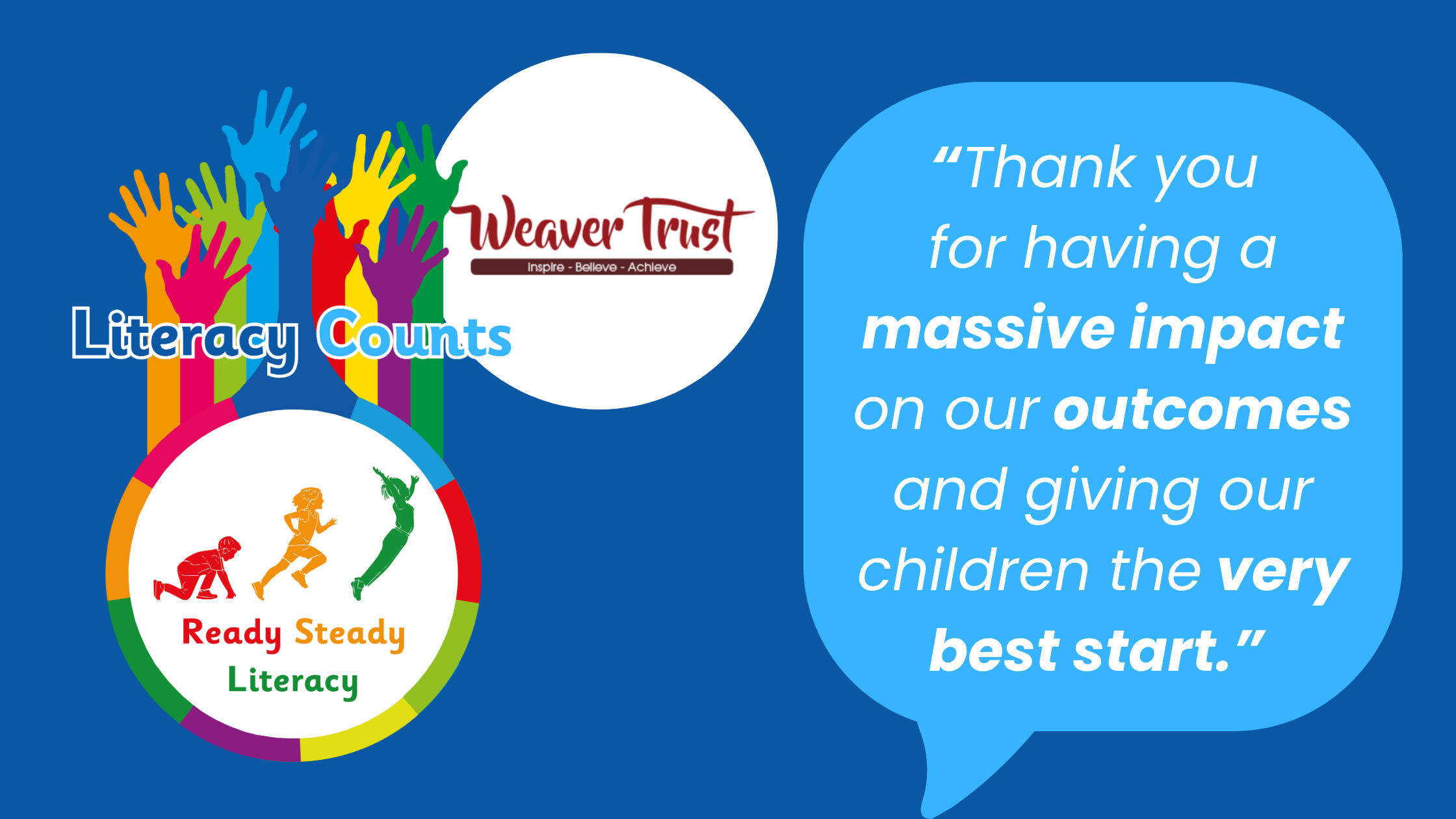
“THANK YOU to you and all of your Literacy Counts team. We couldn't do it without you! Thank you for having a massive impact on our outcomes and giving our kids the very best start.”
Two years of building sustainable expertise
Everybody Write is deliberately more than a short-term intervention. It is a two-year whole-school improvement model designed to build capacity so that improvement can be sustained after the project itself has finished.
Across the two years, schools receive 18 days of structured professional development. Leadership teams develop monitoring and evaluation, shared and guided writing, modelling, sentence accuracy, adaptive teaching, national standards, grammar, reading for writing, vocabulary for writing and strategies for sustaining change. Year-group practitioners also receive focused CPD so that professional learning reaches beyond senior leaders and into everyday classroom practice.
Ready Steady Write sits alongside this professional development, giving schools a sequenced, research-informed curriculum and practical tools through which developing pedagogy can be implemented consistently. The aim is not dependency on a scheme. It is to strengthen the expertise, confidence and shared language of the people using it.
The Trust's 2026 results provide a powerful picture of that work in practice. Outcomes shared by Weaver Trust in July 2026 were:
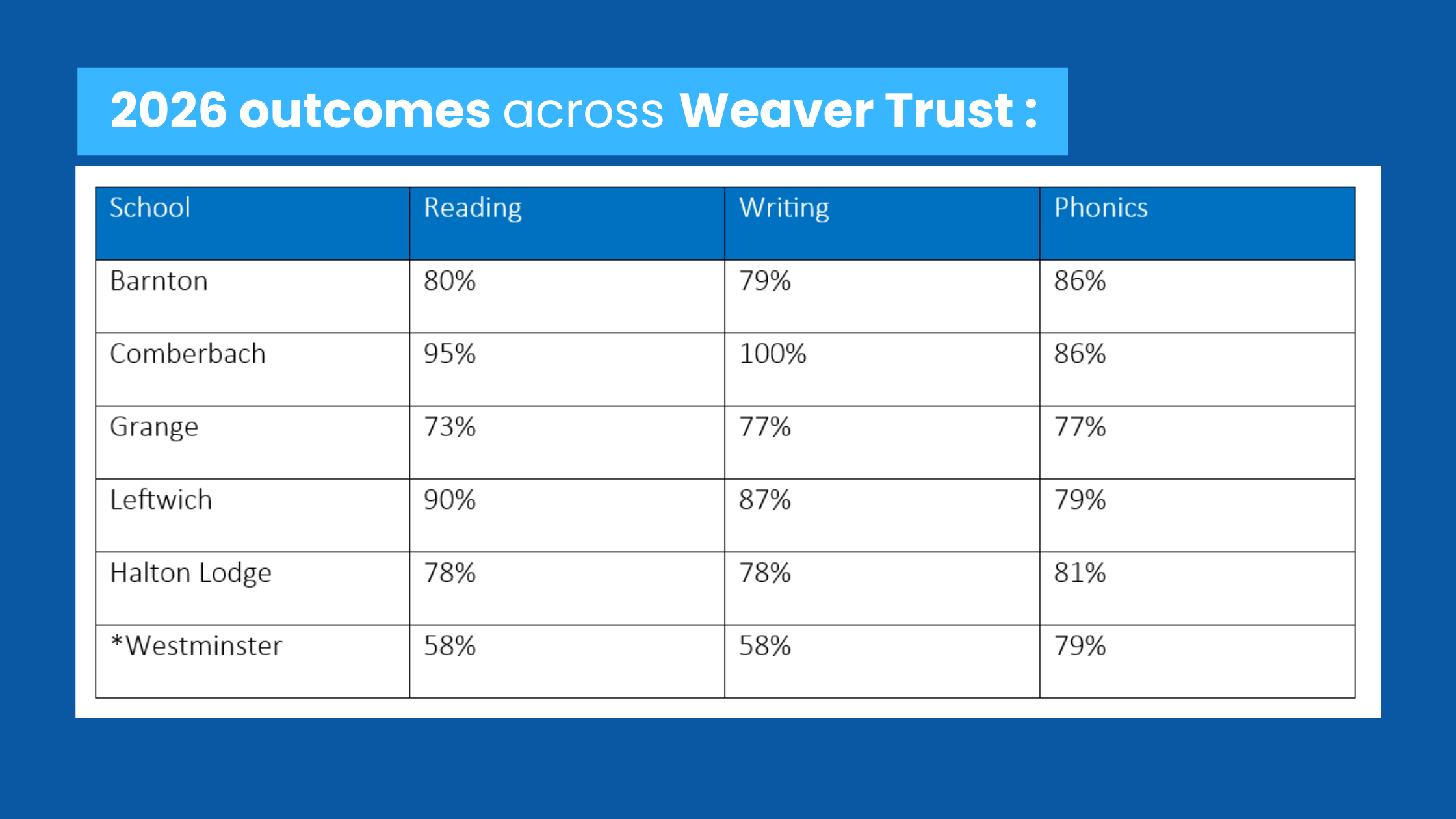
These figures should not be read without context.
Every school serves a different community, and every cohort presents different strengths and challenges.
At *Westminster, for example, the Year 6 cohort comprised just 12 pupils:
86% were eligible for Pupil Premium
50% had SEND
25% had an EHCP
Three children were new to the country during Year 6.
Alison's response to the results was simple: in that context, the children had “smashed it”
Why these results matter
The strength of Weaver Trust story is not one isolated percentage. It is the combination of trust-wide implementation, sustained professional development, shared expectations and outcomes across reading, writing and phonics.
When Alison reflected on the journey previously, she highlighted consistency as one of its most significant achievements:
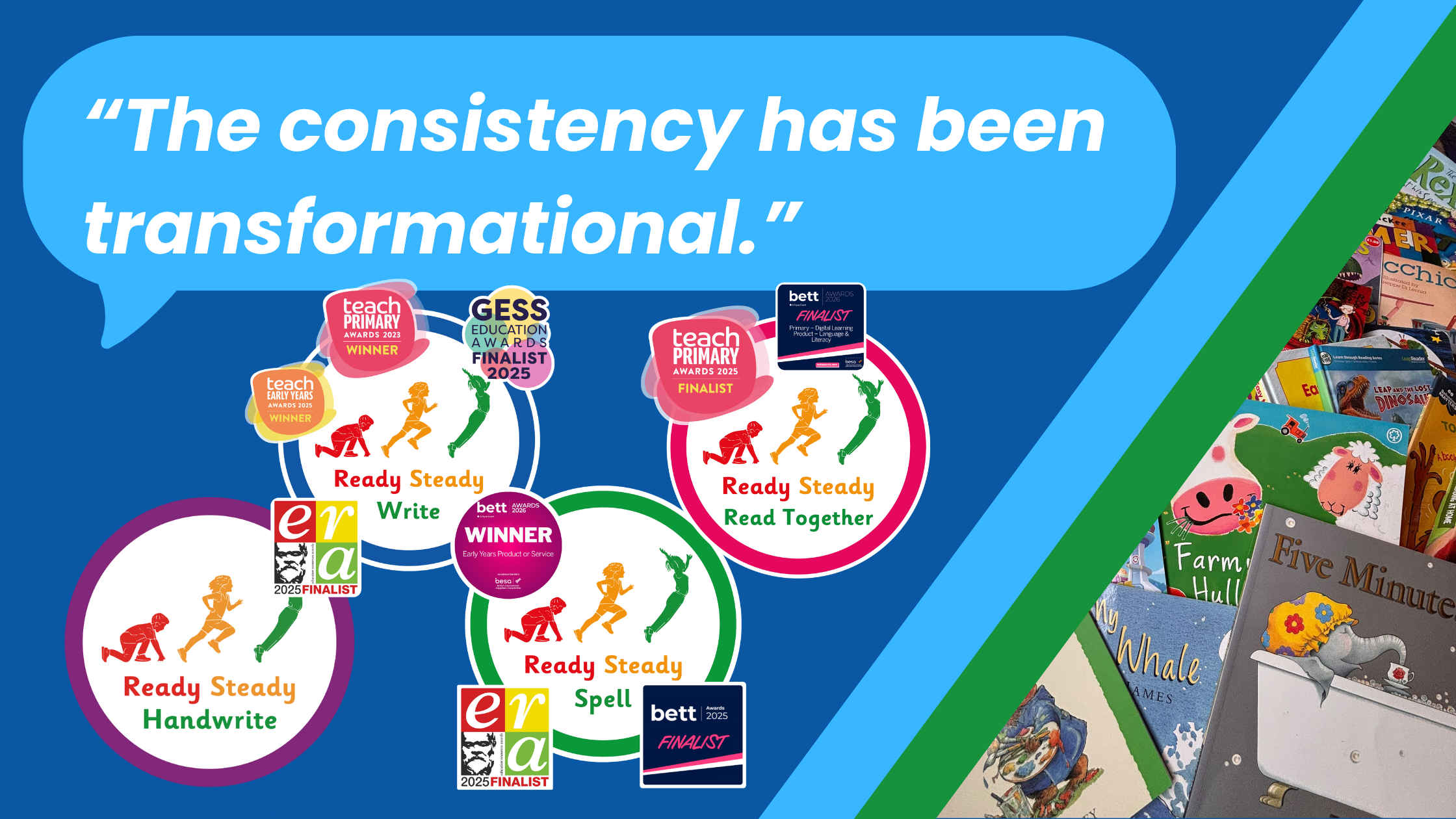
“The consistency has been transformational.” She explained that the work had “put the spotlight firmly back on writing” and helped ensure that even new teachers could quickly adopt Weaver Trust's writing ethos and culture.
That is precisely what Everybody Write was designed to achieve. The project creates a writing leadership team in each participating school, including the headteacher and develops the systems, subject knowledge and pedagogical expertise required for sustainable improvement.
Across Everybody Write projects nationally, more than 16,000 children and 1,368 educators across 58 schools have benefited.
Evaluations just like those in Weaver Trust showed that 100% of senior leaders reported improved staff confidence in teaching writing, 100% reported improved knowledge of National Standards, 92.3% reported reduced workload linked to planning and assessment, and 100% said their school's literacy culture and pupil confidence had strengthened.
A whole-Trust approach rather than a collection of initiatives
Weaver Trust's approach demonstrates the potential of treating literacy improvement as one connected strategy. Reading, writing, spelling and phonics are not separate priorities. Curriculum resources, professional development, leadership and implementation support reinforce one another.
For a multi-academy trust, that coherence matters. It creates a common professional language while allowing each school to respond to its own context. Leaders can collaborate across schools, teachers can share expectations, professional development can reinforce Weaver Trust’s priorities, and successful practice can travel rather than remaining within one classroom or one school.
It also means that when the formal two-year Everybody Write project ended, the expertise does not leave with it. The structures, knowledge, monitoring processes and shared expectations developed through the project remain within the Trust. That is the difference between implementing a resource and building sustainable capacity.
High expectations for every child
A defining feature of the partnership between Weaver Trust and Literacy Counts has been a shared commitment to ambitious expectations for all learners, including disadvantage children, SEND and children who are new to English.
The Westminster cohort illustrates why context and ambition must sit together. Headline percentages alone cannot communicate the complexity of a small cohort with very high levels of disadvantage and additional need. The purpose of adaptive teaching is not to reduce expectations, but to provide the support children need to work towards them.
Everybody Write therefore places particular emphasis on adaptive teaching, foundational knowledge, executive function, fluency and stamina for writing, while Ready Steady Write provides practical scaffolds and a coherent curriculum through which those principles can be enacted.
The end of the project - not the end of the improvement
July 2026 marked the completion of Weaver Trust's two-year Everybody Write project. In many ways, however, that is the point of the model: success is demonstrated when the work can continue without the project needing to remain permanently in place.
Alison had already described her confidence in that sustainability:
“Thanks to this project, I know all of our teachers will be more than competent teachers of writing. It has absolutely been a success story.”
The 2026 outcomes now sit alongside that professional legacy. They reflect the work of Trust leaders, headteachers, English leaders, teachers, teaching assistants and, above all, the children themselves.
“We couldn't do it without you! Thank you for having a massive impact on our outcomes and giving our children the very best start.”
For Literacy Counts, the feeling is mutual. Sustainable school improvement is never something done to a school or trust. It is achieved with people.
Weaver Trust committed to the professional learning, collaboration, consistency and high expectations needed to make change last.
The result is a partnership that has moved from shared ambition, through implementation, to measurable impact - and has left behind something even more important: greater expertise and capacity within the Weaver Trust itself.
Thank you!
We would like to thank Alison Lawson, Director of Education at Weaver Trust, for kindly sharing her experiences. It has been a privilege to hear about the impact Ready Steady Literacy is having on Weaver Trust.
Find out more
Are you a Multi-academy trust looking for a similar impact?
Book a free discovery call with one of our expert consultants today and see how Literacy Counts can support your school.