A Structured Handwriting Programme for Reception to Year 6
Ready Steady Handwrite is a structured handwriting programme that teaches children how to develop clear, fluent and increasingly automatic handwriting from Reception through to Year 6. Rather than relying on repetitive handwriting practice alone, the programme uses carefully sequenced daily lessons, explicit teacher modelling, guided practice and immediate feedback so that children build secure letter formation before progressing to joins and fluent writing.
Fully aligned with the National Curriculum, the EYFS Statutory Framework and the DfE Writing Framework, Ready Steady Handwrite helps children develop the confidence and automaticity needed to focus less on forming letters and more on communicating their ideas across the curriculum.

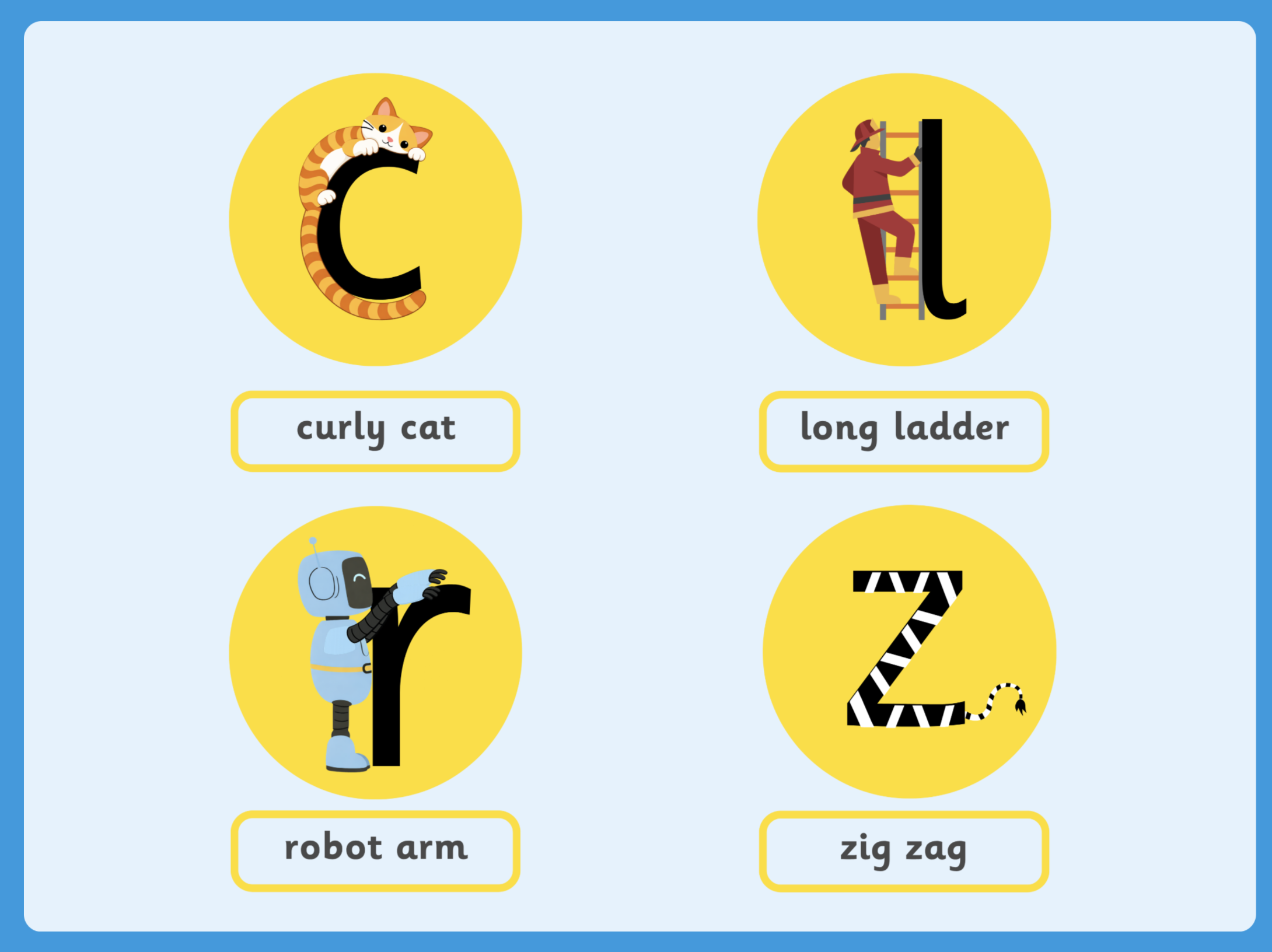
Letter Families
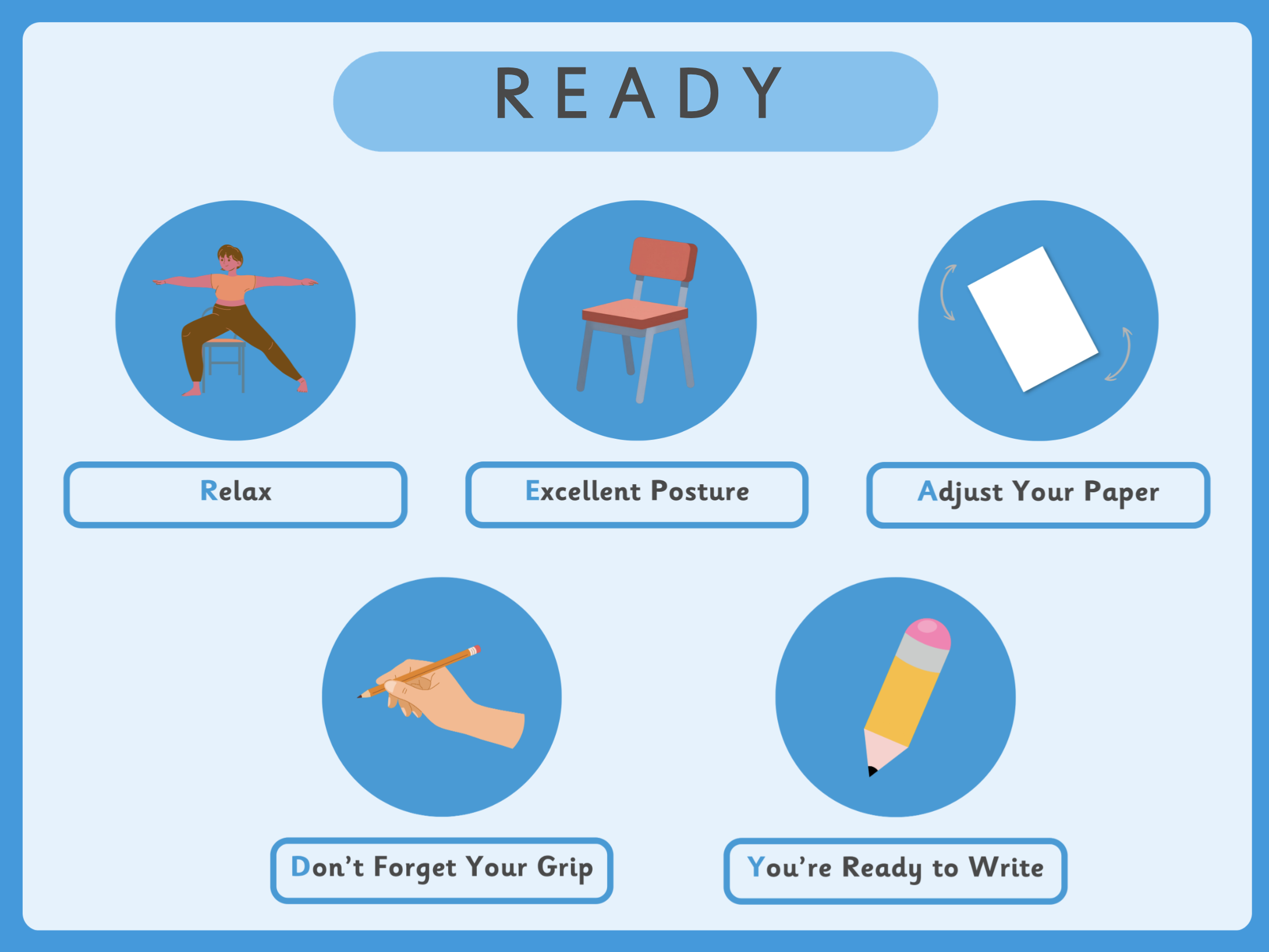
Ready to Write Routines
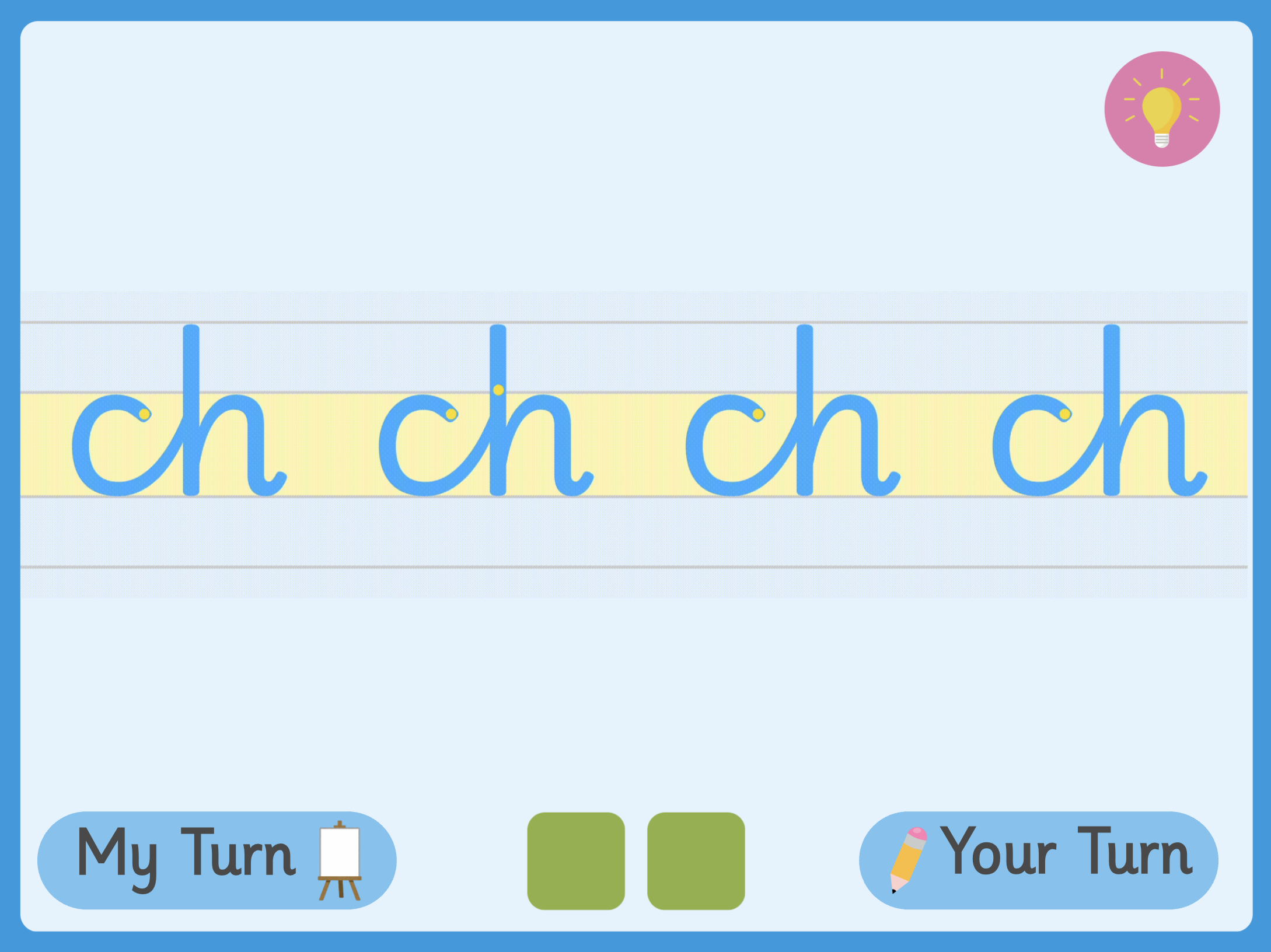
Animated Joins
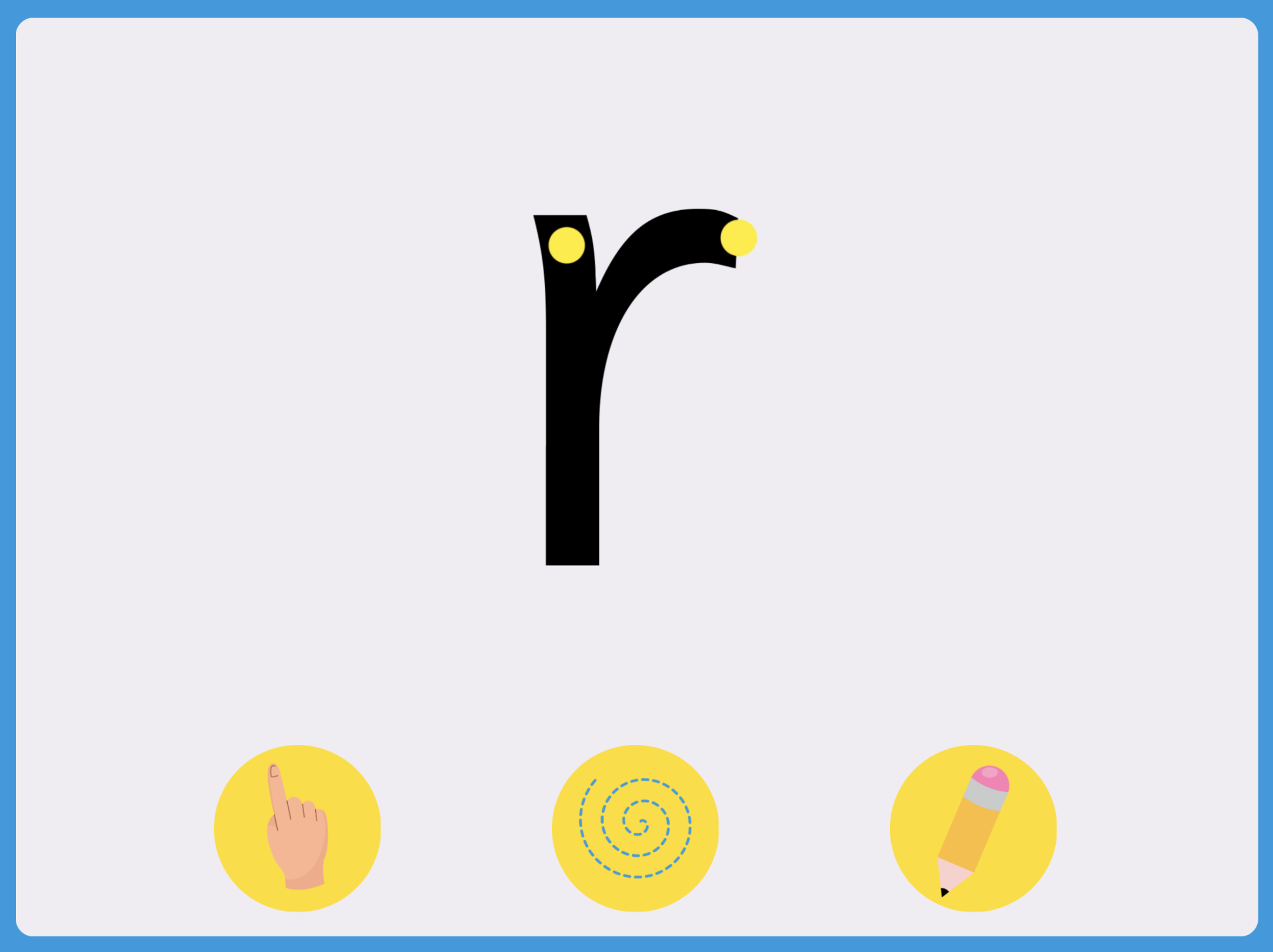
Animated Letter Formations
Get in touch for training details & bespoke costings for your school!
Click here to connect with us.

Why is handwriting still important in primary schools?
Handwriting remains an essential part of learning because fluent transcription supports successful writing. When children no longer have to think about how to form each letter, they can devote more attention to vocabulary, sentence construction and communicating their ideas. The DfE Writing Framework highlights the importance of developing automaticity so that handwriting no longer places unnecessary demands on working memory. Ready Steady Handwrite teaches these skills through short, daily lessons that build confidence, consistency and stamina, helping children become more successful writers in every subject.
How does Ready Steady Handwrite support the DfE Writing Framework?
Ready Steady Handwrite closely reflects the principles of the DfE Writing Framework by teaching handwriting explicitly, systematically and from the earliest stages of learning. The programme develops accurate letter formation, fluent transcription and automaticity through daily teaching, teacher modelling and regular assessment. These approaches help reduce the demands handwriting places on working memory, allowing children to focus increasingly on composition and the craft of writing. Schools can therefore be confident that the programme supports current national expectations for effective handwriting teaching.
What impact should schools expect from using Ready Steady Handwrite?
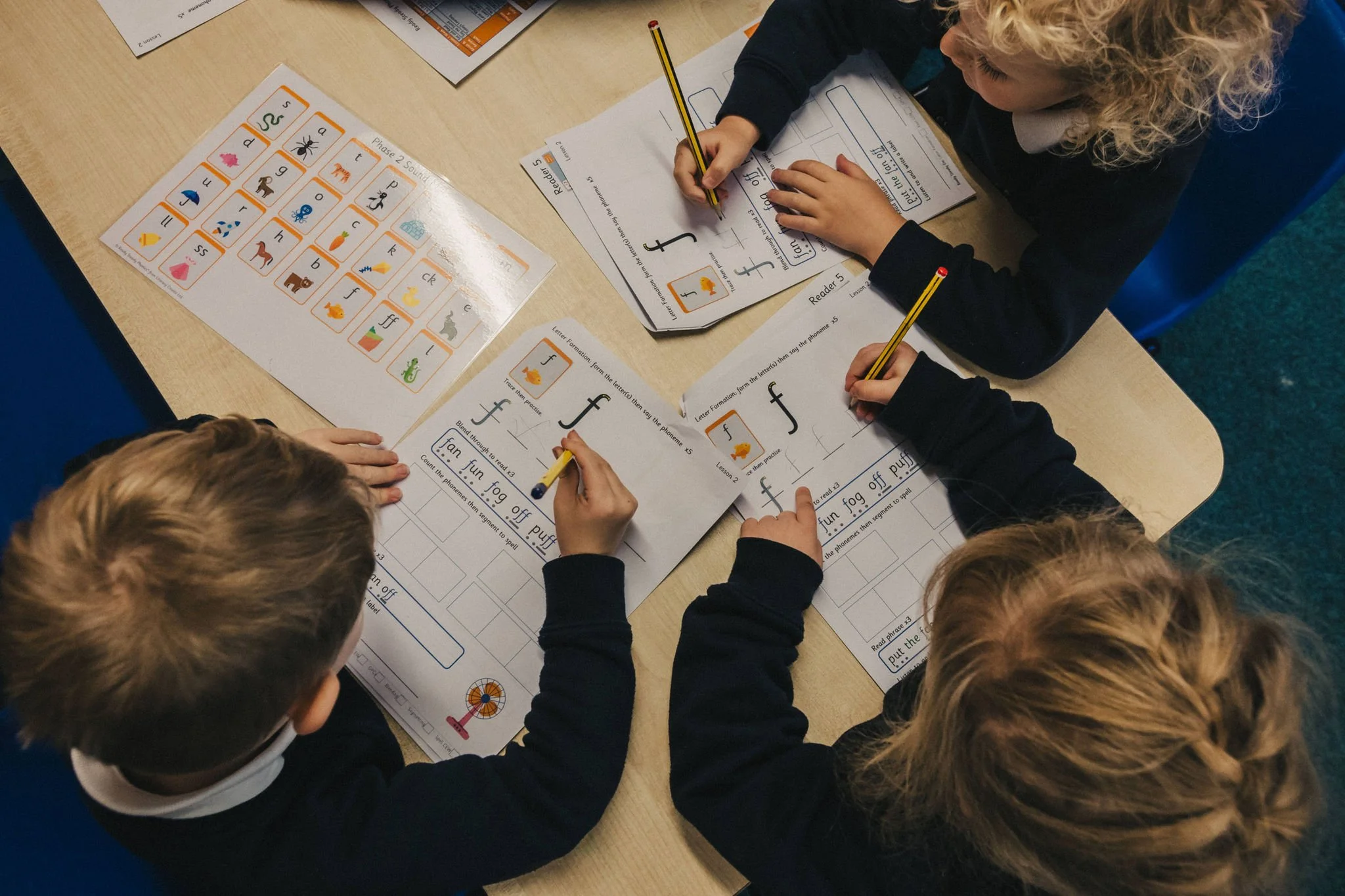
Schools implementing Ready Steady Handwrite can expect to see increasing consistency, confidence and fluency in children's handwriting as the programme becomes embedded. Daily teaching, clear progression and immediate feedback help children develop secure letter formation, accurate joins and greater stamina for writing. As handwriting becomes more automatic, many children are better able to focus on spelling, composition and communicating their ideas, supporting improvements that extend well beyond handwriting lessons themselves.
Handwriting is closely connected to every aspect of writing. When children can form letters and joins automatically, they have more mental capacity available for spelling accurately, choosing vocabulary and composing increasingly ambitious sentences. Fluent handwriting reduces the effort required to record ideas, allowing children to focus on meaning rather than mechanics. Ready Steady Handwrite helps children develop this fluency so that handwriting becomes an effective tool for learning and communication across the curriculum.
A complete, structured handwriting programme for Reception to Year 6
Ready Steady Handwrite has been designed for children from Reception to Year 6 and is suitable for whole-class teaching across the primary phase. It also includes additional support for children who require further practice through Ready Steady Handwrite: Go sessions, enabling teachers to address misconceptions before they become embedded.
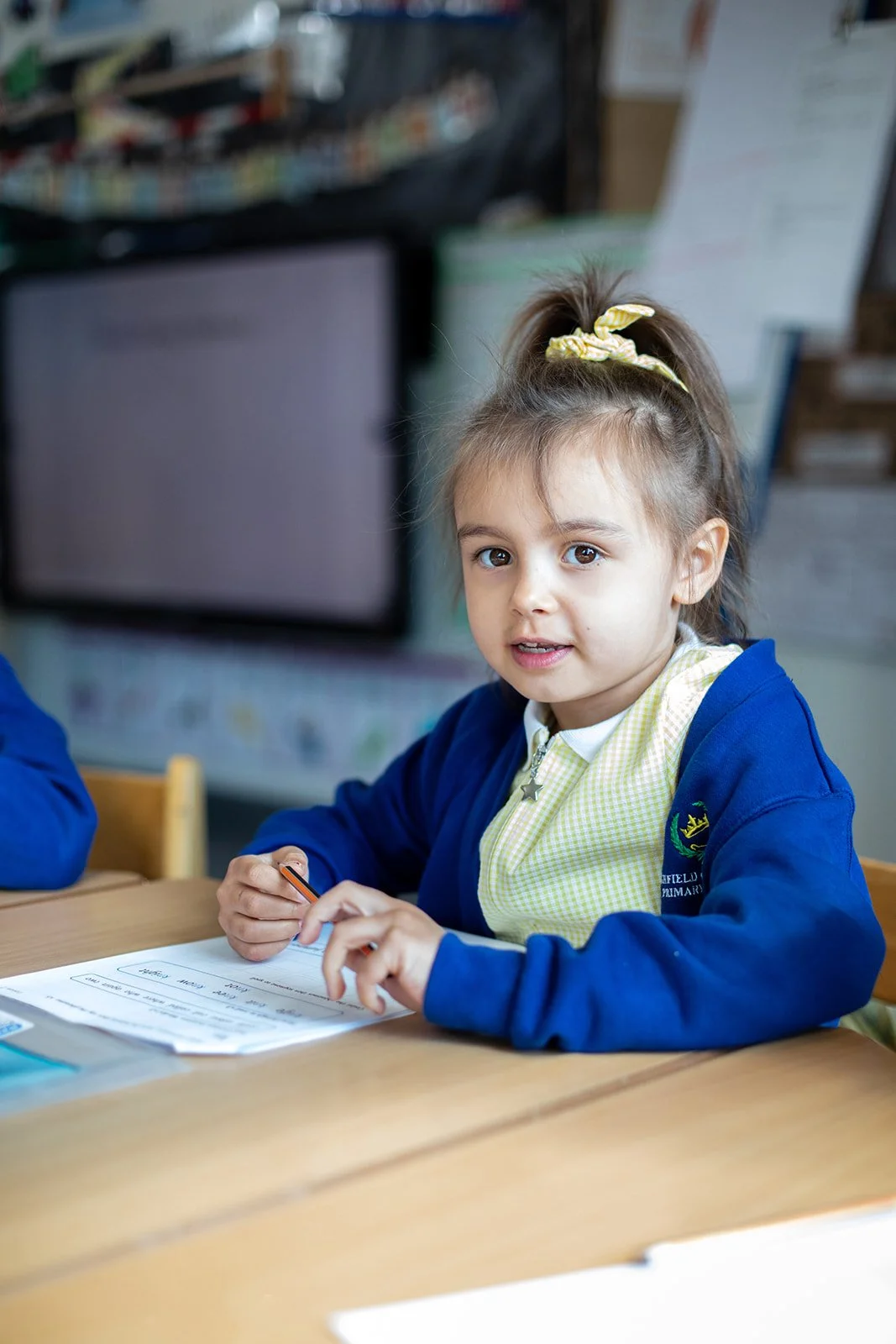
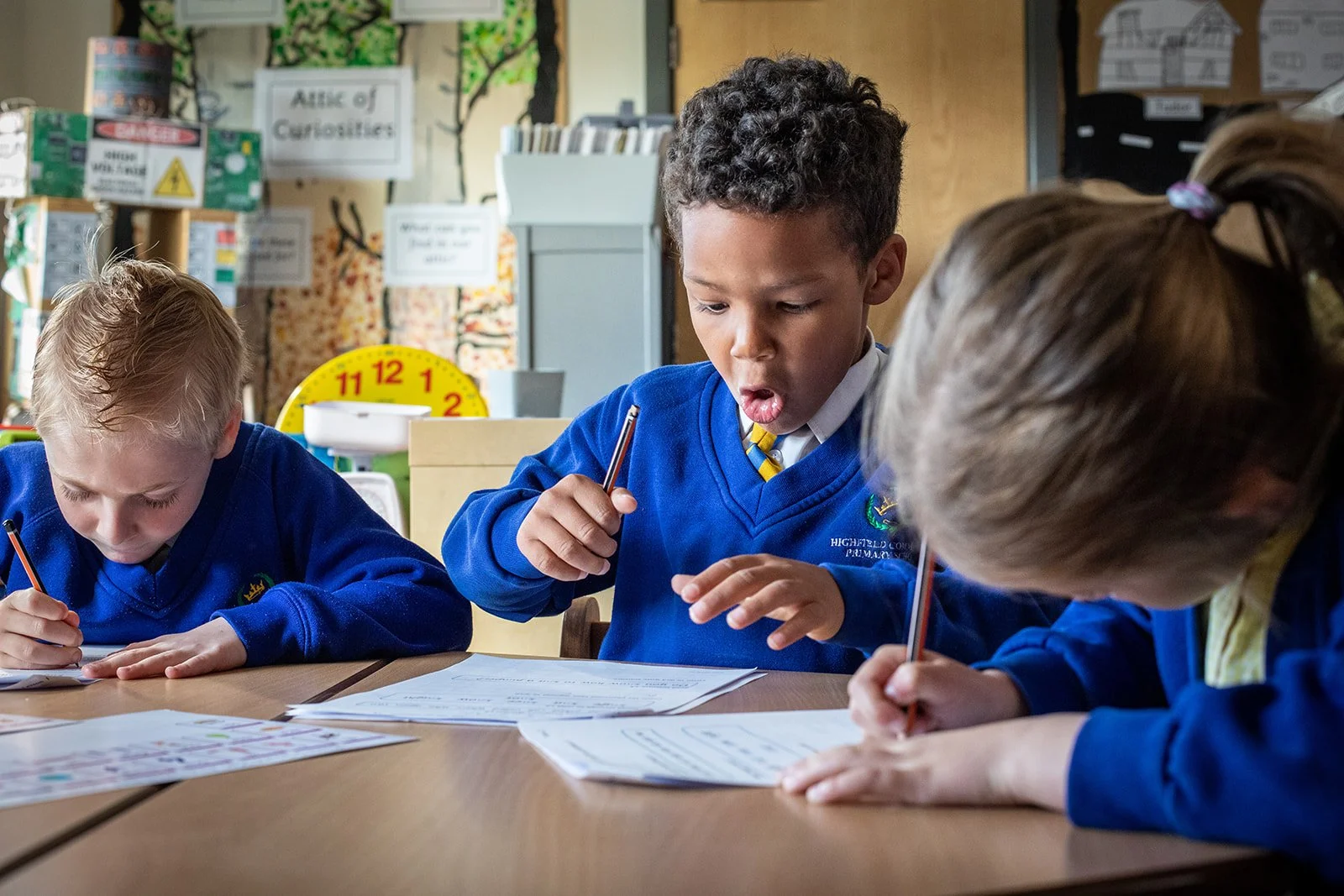
Whether children are learning early letter formation, beginning joins or developing fluent joined handwriting, the programme provides an age-appropriate progression that supports every stage of handwriting development. Children make the greatest progress when handwriting is practised little and often. Ready Steady Handwrite uses short daily lessons because regular practice helps children retain correct letter formation, refine motor movements and develop automaticity over time.
Ready Steady Handwrite has been designed to fit naturally into the school day through focused lessons of approximately four to five minutes. Each lesson follows a familiar sequence that includes preparing to write, teacher modelling, guided practice and immediate feedback. This short, consistent approach helps maintain children's concentration while ensuring handwriting is taught regularly rather than occasionally. Additional small-group or one-to-one sessions can be provided where children need further consolidation or support.


FAQs
-
Ready Steady Handwrite is a complete, structured handwriting programme that teaches children how to develop clear, fluent and increasingly automatic handwriting from Reception through to Year 6. Rather than relying on repetitive handwriting practice alone, the programme uses carefully sequenced daily lessons, explicit teacher modelling, guided practice and immediate feedback so that children build secure letter formation before progressing to joins and fluent writing. Fully aligned with the National Curriculum, the EYFS Statutory Framework and the DfE Writing Framework, Ready Steady Handwrite helps children develop the confidence and automaticity needed to focus less on forming letters and more on communicating their ideas across the curriculum.
-
Handwriting remains an essential part of learning because fluent transcription supports successful writing. When children no longer have to think about how to form each letter, they can devote more attention to vocabulary, sentence construction and communicating their ideas. The DfE Writing Framework highlights the importance of developing automaticity so that handwriting no longer places unnecessary demands on working memory. Ready Steady Handwrite teaches these skills through short, daily lessons that build confidence, consistency and stamina, helping children become more successful writers in every subject.
-
Strong handwriting supports strong writing. By teaching children to form letters accurately, consistently and fluently, Ready Steady Handwrite reduces the cognitive effort required during writing tasks. As handwriting becomes increasingly automatic, children have greater capacity to think about composition, vocabulary and audience rather than the mechanics of letter formation. Daily practice, clear routines and immediate feedback help children develop confidence and independence so that handwriting becomes a reliable tool for learning rather than a barrier to expressing ideas.
-
Ready Steady Handwrite is more than a collection of handwriting sheets. It is a carefully sequenced curriculum that combines explicit teaching, consistent routines, visual modelling, verbal formation patter, purposeful practice and ongoing assessment. The programme follows a logical progression from early letter formation through to joined handwriting while providing additional support for children who need it. Every lesson has been designed to fit easily into the school day, giving teachers a practical approach that develops confident, fluent handwriting across the whole primary phase. From year 2 onwards the joins practiced are them applied in common exception words and other words found in Ready Steady Spell sessions. This means that children encounter a join in a word that the will also learn how to spell. Making the direct link between handwriting and spelling. For Year 3 to Year 6 the words where joins are applied are also words and statutory word list word, both of which are taught explicitly for spelling in Ready Steady Spell.
-
Children make the greatest progress when handwriting is practised little and often. Ready Steady Handwrite uses short daily lessons because regular practice helps children retain correct letter formation, refine motor movements and develop automaticity over time. Frequent opportunities to revisit and apply learning also enable teachers to identify misconceptions quickly and provide timely support. This consistent approach builds secure habits and gives children repeated opportunities to experience success without handwriting becoming an overly time-consuming part of the timetable.
-
Ready Steady Handwrite closely reflects the principles of the DfE Writing Framework by teaching handwriting explicitly, systematically and from the earliest stages of learning. The programme develops accurate letter formation, fluent transcription and automaticity through daily teaching, teacher modelling and regular assessment. These approaches help reduce the demands handwriting places on working memory, allowing children to focus increasingly on composition and the craft of writing. Schools can therefore be confident that the programme supports current national expectations for effective handwriting teaching.
-
Ready Steady Handwrite has been designed for children from Reception to Year 6 and is suitable for whole-class teaching across the primary phase. It also includes additional support for children who require further practice through Ready Steady Handwrite: Go sessions, enabling teachers to address misconceptions before they become embedded. Whether children are learning early letter formation, beginning joins or developing fluent joined handwriting, the programme provides an age-appropriate progression that supports every stage of handwriting development.
-
Ready Steady Handwrite has been designed to fit naturally into the school day through focused lessons of approximately four to five minutes. Each lesson follows a familiar sequence that includes preparing to write, teacher modelling, guided practice and immediate feedback. This short, consistent approach helps maintain children's concentration while ensuring handwriting is taught regularly rather than occasionally. Additional small-group or one-to-one sessions can be provided where children need further consolidation or support.
-
Ready Steady Handwrite teaches letter formation through explicit demonstration, consistent language and carefully structured practice. Teachers model each letter using interactive whiteboard animations, live demonstrations and memorable formation patter before children rehearse movements in the air and then on paper. Starting points, direction and relative letter size are taught consistently, helping children establish secure habits from the outset. Immediate feedback during practice ensures misconceptions are corrected quickly so that accurate letter formation becomes increasingly automatic.
-
Ready Steady Handwrite focuses first on securing accurate, efficient letter formation before introducing joins at the appropriate stage of the programme. By teaching children to establish consistent starting points, correct direction and secure letter shapes without unnecessary lead-in strokes, the programme develops reliable motor patterns that prepare children for fluent joined handwriting later on. This carefully sequenced progression helps children master one stage before moving confidently to the next, reducing confusion and supporting long-term handwriting success.
-
Ready Steady Handwrite introduces joins gradually in Year 2 and only when children have developed secure letter formation. Rather than rushing into joined handwriting, the programme ensures children can form letters consistently before learning carefully sequenced joins that build confidence and fluency. Teachers model every join explicitly using interactive resources and clear verbal patter, giving children repeated opportunities to practise before applying their learning in words. This step-by-step progression helps children develop a natural, legible joined style without compromising accuracy or confidence.
-
Every class includes children who need additional support, which is why Ready Steady Handwrite combines high-quality whole-class teaching with targeted intervention. Teachers use ongoing formative assessment to identify misconceptions quickly and provide immediate feedback during lessons. For children who need further consolidation, Ready Steady Handwrite: Go offers additional small-group or one-to-one sessions that revisit learning at an appropriate pace. This 'keep up' approach helps prevent gaps from widening and gives children the confidence to succeed alongside their peers.
-
Ready Steady Handwrite recognises that left-handed children often benefit from specific teaching strategies rather than different learning outcomes. The programme provides practical guidance on seating, paper position, pencil grip and posture so that left-handed pupils can write comfortably and efficiently. Teachers are encouraged to model these routines consistently, helping children develop fluent handwriting without awkward movements or poor habits. By creating the right physical conditions for writing, schools can support left-handed children to achieve the same high expectations as everyone else.
-
Assessment is woven throughout the programme rather than being left until the end of a unit. Teachers continually observe children as they write, identifying strengths, misconceptions and next steps through formative assessment and immediate feedback. At the end of each half term, consolidation and assessment opportunities help practitioners review progress and identify any children who would benefit from further support. This balanced approach ensures that teaching remains responsive while giving schools a clear picture of handwriting development over time.
-
Ready Steady Handwrite provides everything teachers need to deliver consistent, high-quality handwriting lessons. The programme includes interactive whiteboard resources, pupil workbooks or practice sheets, handwriting friezes, alphabet resources, table mats, teacher guidance and assessment materials. Visual demonstrations, formation patter and supporting classroom resources help ensure children experience the same clear messages every day, making handwriting teaching both efficient for teachers and consistent for pupils.
-
Yes. Ready Steady Handwrite has been designed to be flexible enough to work alongside a school's preferred recording systems. Schools can choose to use the accompanying practice sheets and workbooks or continue using their own handwriting or exercise books while following the same teaching sequence. This flexibility allows schools to adopt the programme without unnecessary changes to existing routines while ensuring children still benefit from consistent teaching, modelling and progression.
-
Handwriting is closely connected to every aspect of writing. When children can form letters and joins automatically, they have more mental capacity available for spelling accurately, choosing vocabulary and composing increasingly ambitious sentences. Fluent handwriting reduces the effort required to record ideas, allowing children to focus on meaning rather than mechanics. Ready Steady Handwrite helps children develop this fluency so that handwriting becomes an effective tool for learning and communication across the curriculum.
-
Schools implementing Ready Steady Handwrite can expect to see increasing consistency, confidence and fluency in children's handwriting as the programme becomes embedded. Daily teaching, clear progression and immediate feedback help children develop secure letter formation, accurate joins and greater stamina for writing. As handwriting becomes more automatic, many children are better able to focus on spelling, composition and communicating their ideas, supporting improvements that extend well beyond handwriting lessons themselves.
-
Getting started is straightforward because Ready Steady Handwrite provides a complete teaching sequence with carefully planned lessons and supporting resources. Teachers simply familiarise themselves with the guidance, prepare the interactive resources and establish the consistent daily routines that underpin the programme. From the very first lessons, children experience explicit modelling, structured practice and regular feedback, giving schools a clear route towards developing confident, fluent and increasingly automatic handwriting across the primary years.
-
Yes. Although handwriting is only one part of learning to write, it can have a significant impact on children's overall writing outcomes. The DfE Writing Framework explains that writing is one of the most cognitively demanding tasks children undertake because they must manage transcription, composition and executive function at the same time. If children are still concentrating on forming letters, remembering starting points or thinking about joins, they have less working memory available for generating ideas, selecting ambitious vocabulary and constructing sentences. The Framework presents handwriting as an essential part of transcription, rather than simply presentation, because fluent transcription allows children to focus on communicating meaning. Ready Steady Handwrite develops this automaticity through explicit teaching, daily deliberate practice, teacher modelling and immediate feedback. As handwriting becomes increasingly secure and efficient, children can devote more attention to crafting their writing, developing greater confidence, stamina and success across the curriculum.
-
Automatic handwriting means children can write accurately, fluently and efficiently without consciously thinking about how every letter is formed. The DfE Writing Framework identifies automatic transcription as one of the foundations of successful writing because it reduces cognitive load and frees working memory for composition. Once handwriting becomes automatic, children can concentrate on choosing vocabulary, organising ideas, applying grammar and writing with purpose rather than focusing on the mechanics of recording words. Ready Steady Handwrite develops this through systematic progression, explicit instruction, purposeful rehearsal and daily practice. By revisiting learning, correcting misconceptions immediately and providing consistent teacher modelling, the programme helps handwriting become a dependable tool that supports confident, independent and increasingly sophisticated writing.
-
No. Before children can write fluently with joined handwriting, they first need secure and consistent letter formation. The DfE Writing Framework stresses the importance of teaching transcription systematically from the earliest stages so that strong foundations are established before greater complexity is introduced. Teaching joins too early can lead to insecure letter formation, inefficient movements and habits that are difficult to correct later. Ready Steady Handwrite follows a carefully sequenced progression that enables children to master accurate letter formation before introducing joins in a logical order. This evidence-informed approach allows children to build confidence step by step, resulting in joined handwriting that is fluent, legible and efficient while supporting wider writing development.
-
Working memory allows children to hold and process information while completing a task, making it fundamental to successful writing. According to the DfE Writing Framework, children are simultaneously managing handwriting, spelling, vocabulary, grammar, punctuation and composition whenever they write. If letter formation is not automatic, valuable working memory is consumed by the mechanics of transcription instead of the craft of writing. Ready Steady Handwrite reduces this cognitive load through explicit instruction, daily deliberate practice, retrieval of previously taught learning and immediate feedback at the point of writing. As transcription becomes increasingly automatic, children are able to devote more attention to developing ideas, crafting sentences and communicating effectively, helping handwriting support rather than hinder writing outcomes.
-
The greatest improvements in handwriting happen when it is taught explicitly and then reinforced consistently across every area of school life. The DfE Writing Framework makes clear that handwriting is an essential component of transcription and should be applied whenever children write, not just during discrete handwriting lessons. Ready Steady Handwrite encourages teachers to model correct letter formation and joins during shared writing, guided writing and independent writing so that children experience the same expectations in English, science, history, geography and beyond. Combined with daily deliberate practice, consistent teacher modelling, timely feedback and regular opportunities to revisit prior learning, this whole-school approach helps handwriting become increasingly fluent and automatic. Ultimately, children recognise handwriting as an essential tool for thinking, learning and communicating successfully across the curriculum.

Want to explore Ready Steady Handwrite for your school or trust? Book a FREE 1:1 meeting with an expert consultant.