Book FREE Info Webinar -
Book FREE Info Webinar -
Ready Steady Spell is a systematic, evidence-based primary spelling scheme for KS1 and KS2. Designed to build confident, accurate spellers from Year 2 to Year 6, it offers full National Curriculum coverage through a cyclical model that reinforces and embeds learning over time.
With engaging resources, memorable Rule Rhymes, and research-informed approaches to spelling strategies, Ready Steady Spell provides a consistent framework for teaching spelling across your school or Multi-Academy Trust (MAT).

Take a Closer Look at Ready Steady Spell
Explore our interactive flipbook brochure to discover how Ready Steady Spell provides a structured, evidence-based spelling programme for KS1 and KS2. Built around the National Curriculum spelling requirements, it offers a consistent and progressive approach to teaching spelling from Year 2 to Year 6.
Inside, you'll find details on our seven unique spelling strategies, lesson structure, Rule Rhymes, and assessment tools — all designed to support a whole school spelling approach. Whether you are a MAT leader or classroom teacher, this brochure shows how Ready Steady Spell can raise attainment and simplify delivery of the KS1 and KS2 spelling curriculum.


A Whole School Spelling Approach for Primary Schools
This structured spelling programme for schools supports all learners, including EAL learners and SEND children. Teachers are supported with ready-to-use resources, interactive slides, and assessment tools that make planning and delivery simple, impactful and saving teacher workload.
Whether you are a single-form entry school or part of a large MAT, Ready Steady Spell delivers a whole school spelling approach that is practical, progressive, and aligned with the KS1 and KS2 spelling curriculum.
Ready Steady Spell contains detailed guidance for effective implementation and supports teaching through resources that allow children to acquire subject skills & knowledge and an understanding of spelling strategies needed for accurate recall.
Furthermore, the beginning Year 2 spell lessons incorporate the Year 1 National Curriculum spelling rules and guidance that are not included in phonics teaching.
Book Free Webinar ~
Book Free Webinar ~
A Structured Spelling Programme for KS1 and KS2
Get in touch for sample access, training details & bespoke costings for your school!
Click here to connect with us.


Ready Steady Spell is an online membership with everything teachers and leaders need to deliver a dynamic and effective spelling curriculum, available at the click of a button.


“Ready Steady Spell has been an exceptional resource for our class this year. The Rule Rhymes are incredibly catchy, and my students absolutely love them. As a result, we have seen an improvement in their spelling abilities. The children now consistently score highly in their weekly spelling tests, a testament to the effectiveness of this resource. We are excited to continue with the scheme in September, and we are now exploring ways the scheme gives additional support to our lowest 20%. Thank you Literacy Counts.”
-A Cornish, Barton Moss Primary School
Fully Resourced


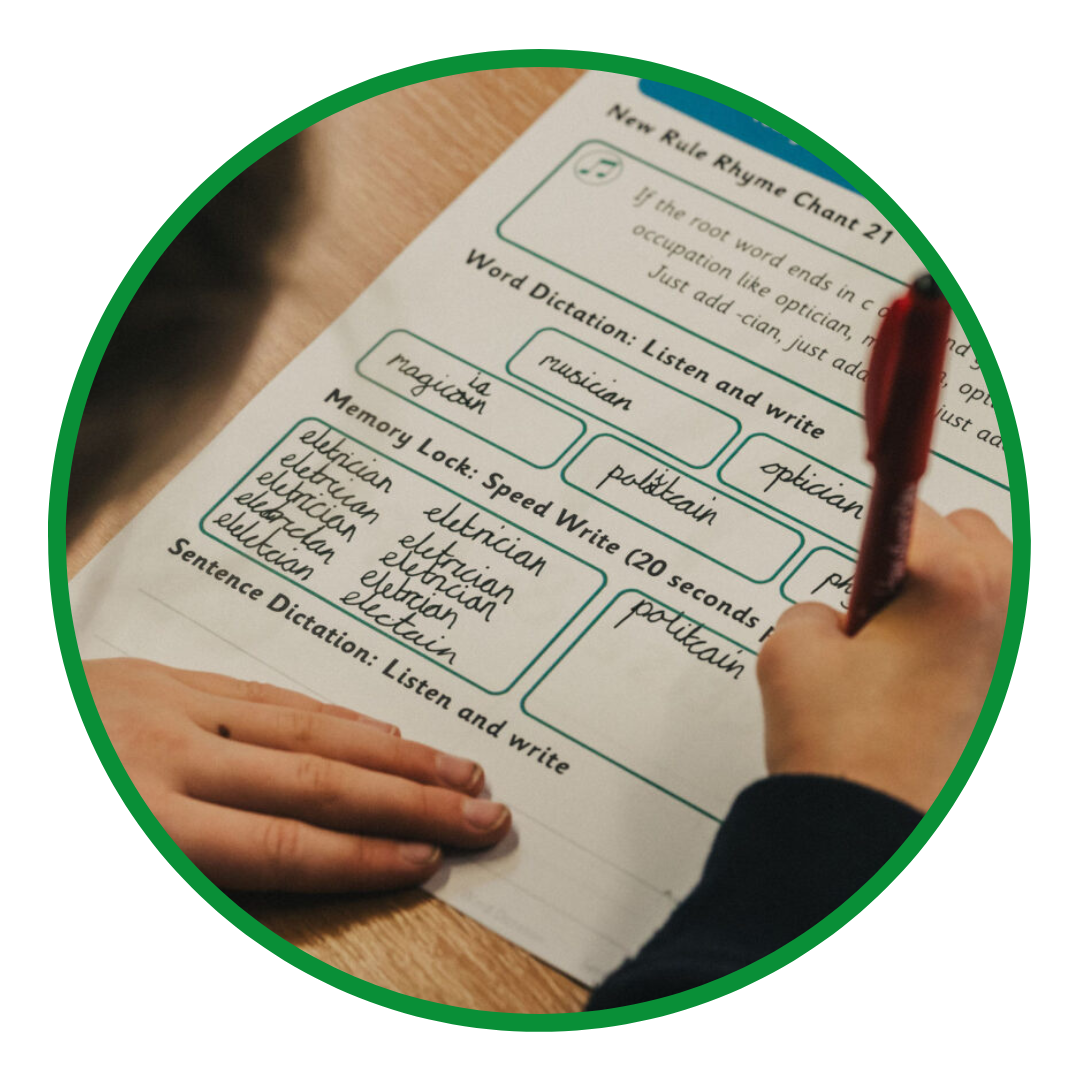
Pupil Booklets

Memorable Strategies
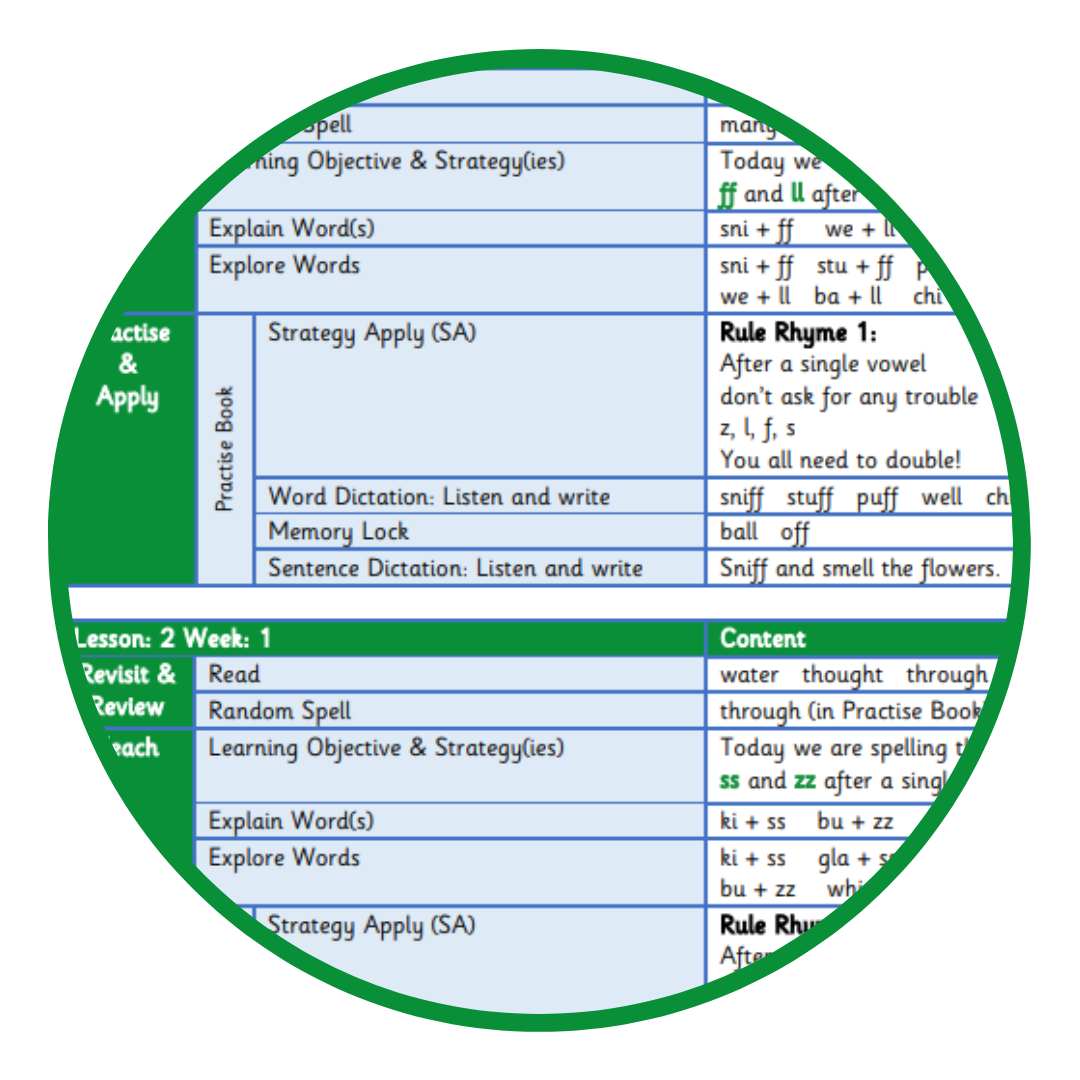
Daily Lesson Plans

Whole Class Learning
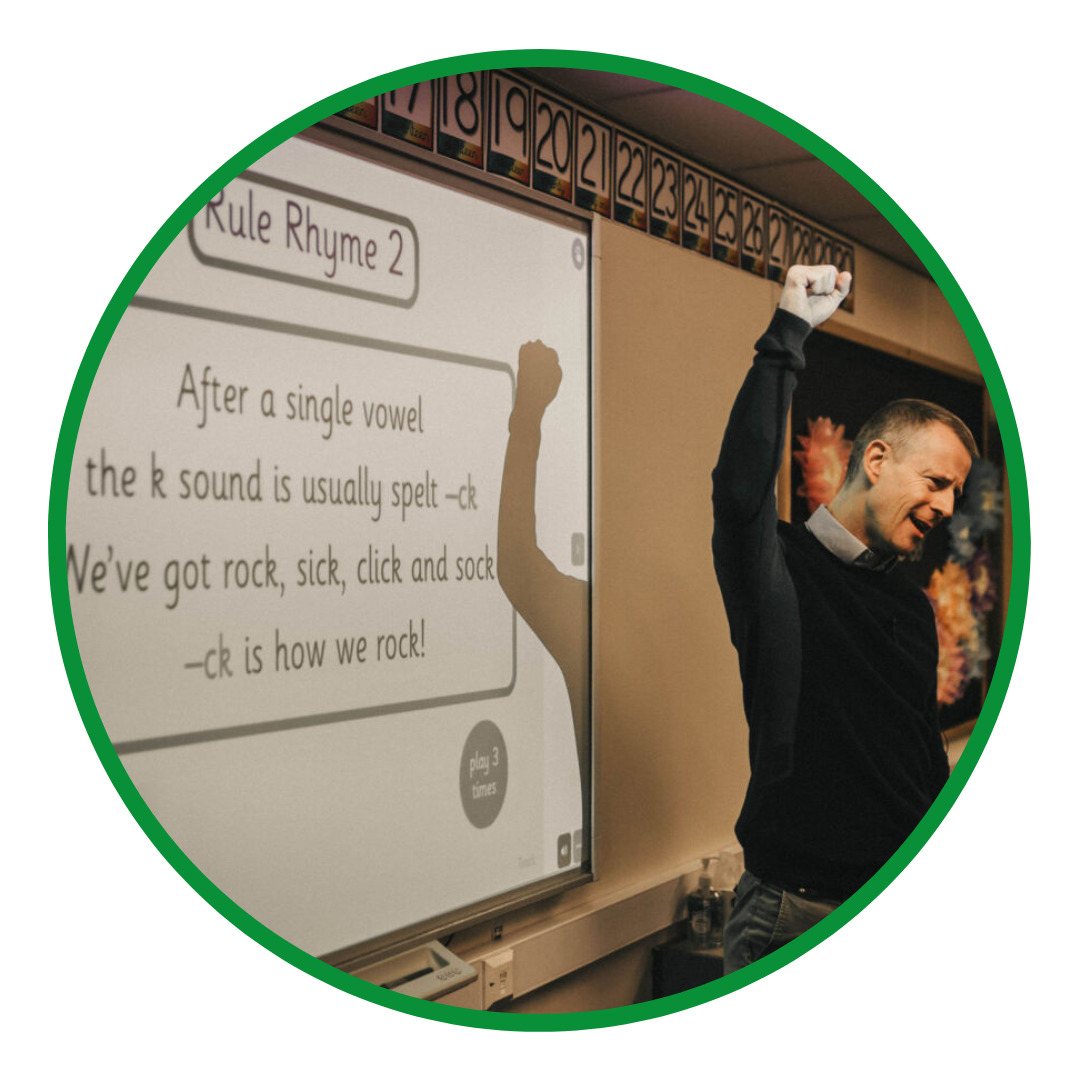
Daily IWB Lessons

Strategy Explainers
…and much more!
FAQs
-
Ready Steady Spell helps children become confident and accurate spellers by teaching spelling in a clear, structured, and cumulative way. This research-informed programme builds children’s understanding of spelling patterns, rules, and word structures while giving them regular opportunities to practise and apply their learning in meaningful contexts. As a result, children develop both spelling accuracy and the confidence to use ambitious vocabulary in their writing.
Ready Steady Spell uses a consistent teaching approach that combines direct instruction, investigation, rehearsal, and application. Children are explicitly taught spelling patterns, morphology, etymology, and statutory word lists through engaging and progressive lessons. The programme provides regular retrieval practice, dictation, proofreading, and opportunities to apply spelling knowledge across the curriculum, helping learning move into long-term memory. Carefully sequenced units ensure that new learning builds on prior knowledge, while scaffolded support and repeated practice help all children experience success. The programme introduces, reinforces and embeds spelling objectives both within and across year groups in a systematic and progressive way.
The impact of Ready Steady Spell can be seen in both child outcomes and classroom confidence. Children become more independent and resilient spellers because they understand how words work rather than relying on memorisation alone. Metacognitive strategies are used to help children become aware of how they learn, remember, and apply spelling knowledge. Rather than simply memorising words, children are encouraged to think about the strategies they use, reflect on patterns and rules, and make informed choices when spelling unfamiliar words. This develops more independent, confident, and accurate spellers. Improved spelling accuracy supports stronger writing fluency and composition, allowing children to focus more confidently on expressing their ideas. For schools, the programme creates consistency in spelling teaching across year groups, supports progression, and helps raise attainment in writing through a systematic and evidence-informed approach.
-
Ready Steady Spell differs from traditional spelling schemes because it is a progressive, systematic and cyclical programme that explicitly teaches children how to become confident and accurate spellers. It is dynamic, uses music and actions and metacognition and self-regulation within all lessons. The four-part teaching sequence reflects familiar phonics approaches, making the transition from phonics to spelling teaching much smoother for children. Alongside full National Curriculum coverage from Year 2 to Year 6, the programme includes dyslexia-friendly lesson slides, carefully reduced content to avoid cognitive overload, vocabulary images and slides, adaptive teaching strategies and targeted intervention through Ready Steady Spell: Go. Rather than teaching spelling rules once and moving on, the programme revisits, reinforces and embeds learning over time to support accurate recall and long-term success. It also includes built-in baseline assessments and error analysis tools to help teachers identify gaps and target difficulties with precision. A key difference is the explicit teaching of metacognitive seven spelling strategies alongside Routes to Remember: Memory Lock activities and weekly word investigations, which deepen children’s understanding of how words work and support automatic recall. Unlike traditional spelling schemes that often rely on memorising weekly word lists alone, Ready Steady Spell teaches children the spelling rules, patterns and strategies needed to apply spelling knowledge independently. The programme also ensures full coverage of all National Curriculum spelling content domains, with significant revision and consolidation periods built into Years 4 and 6 to allow deeper embedding before transition points and statutory assessments. It also includes word and sentence dictation in all lessons.
In classrooms, teachers follow a clear teaching progression supported by fully planned lessons, interactive resources and accessible lesson slides designed to reduce overwhelm and improve focus. The four-part teaching sequence enables children to revisit prior learning, acquire new spelling knowledge linked to the lesson objective and apply taught spelling strategies at the point of learning. These seven spelling strategies are taught explicitly using child-friendly explanations and visual symbols so that children understand how to approach unfamiliar spellings independently. Teachers consistently model and reinforce the strategies during spelling lessons and across other curriculum writing activities.
The programme also includes Routes to Remember: Memory Lock activities within the Practise & Apply child booklets and across weekly lessons. These activities are designed to help children overlearn key spellings so they become stored in the long-term working memory and can be recalled automatically when writing. In addition, Investigation Time takes place in the final lesson of the week. During these sessions, children investigate, discuss and explore words in greater depth to develop their morphological and etymological understanding. Through a range of structured investigations, children build knowledge about word structure, meaning and origin, helping them make stronger connections between spelling patterns and vocabulary.
In Years 3 to 6, the programme is delivered through three focused lessons each week, allowing time for consolidation and application across the wider curriculum. Lessons include suggested adaptations and scaffolds to support a wide range of learners, including children with SEND and those who need additional support. Ready Steady Spell also includes a clear Focus Group approach for children who make slower progress or have identified spelling difficulties. Focus Groups are designed for up to six children and allow practitioners to use individualised teaching approaches and professional judgement to adapt learning expectations where needed. Practitioners use formative assessment, baseline assessments and detailed error analysis to identify misconceptions, gaps in learning and areas requiring consolidation. Children who need further support can then access additional Ready Steady Spell: Go sessions outside the main spelling lesson to revisit and secure learning at an appropriate pace.
Homework and spelling tests are also approached differently within Ready Steady Spell. Rather than simply learning isolated words, children are encouraged to apply taught strategies to support accurate recall and understanding. Spelling tests take place the following week and assess words linked to previously taught objectives, helping children revisit and retain prior learning over time. The lists also include statutory word list words for Years 3 to 6 and Common Exception Words in Year 2. A dedicated Home Support booklet is provided to help parents and carers understand the approaches and strategies being used in school so they can support learning consistently at home.
The impact is that children develop greater confidence, spelling accuracy and long-term retention because learning is delivered in manageable, accessible steps and revisited regularly. The familiar phonics-style lesson structure supports a smoother transition into spelling learning, while repeated opportunities to apply strategies help children transfer spelling knowledge into independent writing. Explicit teaching of spelling strategies equips children with practical tools for accurate spelling recall and application across the curriculum, while Routes to Remember: Memory Lock activities support automaticity, fluency and writing stamina by securing spellings in long-term memory. Investigation Time further strengthens vocabulary, word knowledge and understanding of spelling patterns through meaningful discussion and exploration of morphology and etymology. The structured homework and testing approach ensures children are learning how spelling works rather than simply memorising lists for short-term recall. Full coverage of all spelling content domains, alongside dedicated revision periods in Years 4 and 6, gives children increased opportunities to consolidate and embed spelling knowledge securely over time. Dyslexia-friendly resources, reduced cognitive load and carefully targeted intervention ensure that all learners are supported to achieve age-related expectations. Schools benefit from a consistent whole-school approach to spelling that promotes inclusion, supports teacher workload with high-quality resources and improves outcomes for all children through precise assessment, adaptive teaching and targeted support.
-
Ready Steady Spell is research-informed and supports children with SEND or spelling difficulties through a structured, inclusive, and highly scaffolded approach to spelling instruction. The programme breaks learning into manageable steps, provides regular opportunities for revision and overlearning, and teaches spelling explicitly so that all children can access and succeed in spelling learning.
Alongside full National Curriculum coverage from Year 2 to Year 6, the programme includes dyslexia-friendly lesson slides, carefully reduced content to avoid cognitive overload, adaptive teaching strategies and targeted intervention through Ready Steady Spell: Go. Rather than teaching spelling rules once and moving on, the programme revisits, reinforces and embeds learning over time to support accurate recall and long-term success. It also includes built-in baseline assessments and error analysis tools to help teachers identify gaps and target difficulties with precision.
Ready Steady Spell whole class lessons use clear lesson routines, consistent teaching strategies, and cumulative progression to reduce cognitive overload and support retention. New learning is carefully sequenced and revisited regularly through retrieval practice, dictation, proofreading, and application activities. Lessons encourage children to explore spelling patterns, morphology, and word structures in a multi-sensory and interactive way, helping them make meaningful connections between words. Vocabulary slides include carefully selected images to support children in understanding the meaning of words, helping to strengthen vocabulary development and make spelling learning more accessible for SEND and EAL learners. Scaffolded support, partner talk, oral rehearsal, and teacher modelling allow children to develop understanding before applying spelling independently. The programme also promotes metacognitive strategies for example ‘musical memory’ in the teaching of Rule Rhymes, helping children reflect on the approaches that support them most effectively. Ready Steady Spell includes a lesson delivery adaptation guidance document that aligns directly with the teaching sequence. This document specifically supports access to mainstream lessons for children with SEND and pupils learning English as an additional language (EAL). The guidance helps teachers adapt instruction, scaffold learning, reduce cognitive overload, and provide additional opportunities for oral rehearsal, retrieval, and modelling where needed.
The impact for children is increased confidence, engagement, and independence in spelling. Children with SEND or spelling difficulties develop a stronger understanding of how words work and are better able to apply spelling knowledge in their writing across the curriculum. Regular success opportunities help reduce anxiety around spelling and encourage resilience. For schools, Ready Steady Spell supports inclusive classroom practice by providing a consistent and adaptable approach that enables all learners to make progress while maintaining high expectations for spelling attainment.
-
Ready Steady Spell supports mixed-age teaching by aligning closely with the progressive structure of the National Curriculum spelling objectives. The programme is designed so that spelling knowledge is revisited, reinforced, and embedded over time, allowing children in mixed-age classes to build on prior learning while still accessing age-appropriate curriculum objectives.
In the National Curriculum, spelling objectives are organised cumulatively in year group phases for example Lower Key Stage Two and Upper Key Stage Two, with new learning building on previously taught spelling patterns, rules, morphology, and word structures. Ready Steady Spell reflects this structure through its cyclical model of teaching: Introduce, Reinforce, and Embed. Children revisit spelling objectives multiple times across and within year groups, helping them deepen understanding and strengthen long-term retention. In mixed-age classes, the Cycle A and Cycle B model ensures that objectives from both year groups are systematically covered over a two-year rolling programme. This approach allows teachers to teach shared concepts where appropriate while still ensuring full National Curriculum coverage and progression for each year group.
The impact is that children experience coherent and connected spelling learning rather than isolated yearly objectives. Regular revisiting helps children retain spelling knowledge more effectively and supports overlearning, which is particularly beneficial in mixed-age settings where prior knowledge may vary. Children become more confident and accurate spellers because learning is reinforced over time. For schools, the mixed-age model provides a manageable and well-sequenced approach to curriculum coverage, ensuring consistency, progression, and full alignment with National Curriculum expectations across all year groups.
-
A spelling scheme for primary is a structured approach that teaches children how words are constructed, combining phonics, morphology, and orthographic patterns in line with the National Curriculum for England. A common misconception is that spelling is best taught through weekly word lists and tests, when in reality this often leads to short-term memorisation rather than long-term retention. Another misconception is that once phonics is secure, spelling will naturally develop, but children need explicit teaching beyond phonics, especially in KS2. In effective classrooms, spelling is taught through patterns, rules, and meaningful application, with regular retrieval practice and opportunities to use words in writing. Children benefit most when they understand why words are spelled in certain ways, rather than simply memorising them in isolation. Strong teaching also connects spelling with vocabulary and writing, ensuring children apply their knowledge across the curriculum. The best schemes provide clear progression, revisit prior learning, and balance explicit instruction with independent practice. Ready Steady Spell follows this approach by structuring learning around patterns and word study, while embedding retrieval and application within each unit. It avoids isolated word lists by linking spelling directly to writing outcomes and vocabulary development. As a result, children build secure, transferable spelling knowledge that supports both accuracy and composition.
-
Ready Steady Spell intervention is built into the programme as a structured, responsive system called Ready Steady Spell: Go. It is designed to ensure that children who need additional support do not fall behind and instead receive targeted teaching that directly addresses their specific gaps in spelling knowledge and application. The meta-cognitive strategies for example, the fun rule rhymes and phonics based strategies.
In practice, intervention begins with ongoing formative assessment, baseline assessment and detailed error analysis during whole-class lessons. Teachers identify children who are not fully securing learning within the Practise & Apply sections or who show recurring misconceptions. These children are then allocated to small, focused intervention groups, typically up to six children, where a practitioner can deliver more individualised support.
Ready Steady Spell: Go sessions take place outside the main spelling lesson. They revisit prior learning, break down misconceptions and re-teach key spelling rules and strategies at a slower and more supported pace. Teachers use information from Practise & Apply booklets, observation notes and assessment records to ensure intervention is precisely targeted rather than generic. This means support is matched to the exact area of need, whether that is a spelling rule, strategy application or word-specific difficulty.
The impact of this approach is that intervention is timely, focused and directly linked to classroom learning. Children are able to close gaps quickly because they revisit content in a structured way that reinforces understanding and builds confidence. Over time, this ensures more children keep up with age-related expectations rather than needing to catch up later, supporting stronger long-term outcomes in spelling accuracy and written fluency.
-
For Ofsted, spelling is not usually judged as a separate subject judgement. It contributes to wider judgements around quality of education, particularly curriculum intent, implementation and impact in reading, writing and across the curriculum. Inspectors will want to see that spelling is systematically taught, well sequenced and applied in children’ independent writing.
In practice, you need to be able to show that spelling is clearly planned and progressive across year groups, fully aligned to the National Curriculum and that children build knowledge over time rather than revisiting disconnected lists. Inspectors will typically look for evidence that spelling rules, patterns and strategies are explicitly taught, practised and then applied in real writing contexts. A programme like Ready Steady Spell supports this because it shows a structured progression, repeated exposure and consistent teaching approaches from Year 2 to Year 6.
They will also expect to see how teaching is adapted for different learners. This includes how teachers use assessment to identify gaps, how they support children who struggle and how intervention is used to close those gaps rather than just repeating whole-class teaching. Evidence such as baseline assessments, error analysis, Focus Groups and targeted intervention like Ready Steady Spell: Go can be useful because it shows a responsive approach rather than a one-size-fits-all model.
In lessons and books, inspectors will look for consistency. They will want to see children applying taught spelling knowledge in their writing, not just completing isolated spelling activities. They may sample books to check whether spelling is improving over time and whether children are using taught strategies independently. They will also look at whether expectations are appropriate, including whether common exception words and statutory word lists are being taught and used accurately.
Impact is key. You should be able to explain how your approach to spelling leads to children becoming more accurate, confident writers over time. This includes evidence of progress in spelling within writing, not just test scores. Schools that do this well can clearly show that spelling is not an isolated weekly activity but part of a coherent writing curriculum where children gradually build automaticity, fluency and independence.
-
Make spelling expectations clear and consistent
Explain how spelling is taught in school including rules, patterns and strategies rather than just weekly word lists.Share weekly spelling focus
Send home what children are learning each week so parents/carers understand the rule or pattern being taught not just the words.Teach parents/carers the strategies used in school
Show simple versions of spelling strategies so parents/carers can support children using the same language and approach.Provide short focused home practice
Encourage small daily practice such as 5 to 10 minutes rather than long spelling homework sessions.Use look, say, cover, write, check correctly
Model this strategy for parents/carers and explain how it should be used alongside understanding of spelling patterns.Share common exception words and statutory lists
Give parents/carers access to year group word lists so they can support recall of high frequency and statutory spellings.Use games and practical activities
Suggest engaging ways to practise spelling such as word sorting, word hunts, magnetic letters or spelling bingo.Send home examples of progress
Show before and after examples so parents/carers can see how spelling improves over time through teaching and practice.Offer guidance for mistakes and misconceptions
Help parents/carers understand that errors are useful and show what needs to be taught next rather than something to simply correct.Build consistency between home and school
Use the same spelling terminology, strategies and expectations so children are not learning conflicting approaches.
-
Ready Steady Spell tracks progress through a combination of baseline assessment, ongoing formative assessment, error analysis, child work evidence and end-of-unit or half-term consolidation tasks so teachers can identify gaps early and measure how securely children are applying spelling rules and strategies over time.
At the start, children complete a baseline assessment which helps teachers identify starting points and gaps in spelling knowledge. This informs initial teaching and intervention planning.
During lessons, teachers use formative assessment continuously. This includes observation of children during Practise & Apply tasks, discussion of spelling choices and checking written outcomes in books. Teachers note whether children are applying taught spelling rules and strategies independently or still relying on support.
Error analysis is a key feature. Teachers identify specific misconceptions or repeated errors and record these so teaching can be adapted precisely. These insights are used to group children, adjust explanations or revisit content in Ready Steady Spell: Go intervention sessions.
Child progress is also tracked through Practise & Apply booklets where children’s application of spelling rules, patterns and strategies is recorded over time. Teachers can see whether learning is being retained, revisited and improved.
At the end of units or half terms, consolidation and summative assessment weeks provide further evidence of retention and application. These are used alongside ongoing teacher judgement to build a clear picture of progress.
Intervention groups and Focus Groups also contribute to tracking, with practitioners recording targeted notes on misconceptions, gaps and progress made during additional sessions.
This approach gives teachers a detailed and ongoing picture of each child’s spelling development rather than relying on a single weekly test score. It helps identify children who are keeping up, those who need consolidation and those who require targeted intervention.
As a result, teaching can be adapted quickly and precisely, which reduces gaps over time. Children benefit because misconceptions are addressed early and learning is revisited until it is secure, leading to stronger long-term spelling accuracy and improved application in independent writing. Schools gain clearer evidence of progress, stronger consistency across year groups and a more reliable picture of attainment in spelling over time.
-
Ready Steady Spell supports the application of spelling across the curriculum by helping children transfer spelling knowledge from discrete spelling lessons into purposeful reading and writing in all subjects. The programme develops children’s understanding of how words work so they can apply spelling strategies independently in meaningful contexts.
Ready Steady Spell teaches spelling through a structured sequence of introduce, reinforce, and embed, ensuring that learning is revisited regularly and secured in long-term memory. Lessons focus not only on spelling accuracy but also on understanding spelling patterns, morphology, etymology, and vocabulary meaning. Dictation, proofreading, editing, and sentence-level application activities provide regular opportunities for children to practise and apply spelling knowledge in context. Vocabulary slides and explicit discussion of word meaning also strengthen links between spelling, language comprehension, and subject-specific vocabulary across the wider curriculum. Because the programme promotes metacognitive thinking, children learn to select and apply spelling strategies independently when writing in different subjects.
The impact is that children become more confident in using ambitious and accurate vocabulary across the curriculum. Stronger spelling knowledge supports writing fluency because children can focus more effectively on communicating ideas rather than relying on guesswork when spelling. This improves the overall quality and accuracy of writing in subjects such as history, geography, and science. For schools, Ready Steady Spell creates consistency in spelling expectations and supports a whole-school approach to literacy, helping children apply transcription skills successfully across all areas of learning.
-
Implementation begins with a leadership and staff training process led by an experienced consultant, starting with a leadership day to prepare key documentation and systems, followed by whole-staff training so the programme is consistently delivered from Year 2 to Year 6 with clear links to phonics and early reading.
Implementation begins with a leadership day where senior leaders work with an experienced consultant to build a clear action plan for rollout. This includes reviewing and developing the marking and feedback policy, writing or refining a whole-school spelling policy and ensuring systems are in place for assessment, progression and intervention before teaching begins.
As part of this process, the consultant also works with leaders to explore how phonics links to spelling in the school’s specific context, ensuring there is a clear transition from early reading to spelling instruction. This is particularly important in aligning Year 1 phonics provision with the start of the Ready Steady Spell programme, where Year 1 National Curriculum spelling content is covered at the beginning of Year 2.
All staff are expected to attend training because spelling strategies are not limited to Key Stage
The explicit spelling strategies taught within the programme can also be highly effective in Reception and Year 1, supporting early writing development and reinforcing phonics application. Following the leadership day, staff complete four detailed training modules which cover the teaching sequence, spelling strategies, assessment and intervention. Staff also have access to online training clips via the website to support ongoing development and consistency.
A further key element is a personalised staff meeting delivered by an expert consultant, tailored to the school. This focuses on practical implementation issues including adaptations for different learners, SEND considerations and any school-specific barriers. It also ensures staff understand how to apply the programme effectively within their own setting.
Once training is complete, staff deliver the structured four-part teaching sequence using programme resources. Leaders monitor consistency across year groups and ensure systems such as Focus Groups and Ready Steady Spell: Go intervention are embedded effectively.
This implementation model ensures strong whole-school ownership from the start, with consistent expectations across all staff. Involving all teachers, including those in Early Years and Key Stage 1, strengthens continuity because spelling strategies can be reinforced earlier and applied more effectively when children enter Year 2.
The consultant-led focus on phonics links ensures that spelling teaching builds naturally on prior learning rather than starting from scratch, which supports smoother transition and stronger early progress. Clear training, shared policy and ongoing support reduce variability between classes and increase staff confidence.
Overall, this leads to more consistent teaching of spelling across the school, stronger links between phonics and writing, and improved long-term outcomes in spelling accuracy, fluency and independence.
-
Ready Steady Spell supports reluctant or less confident writers by building secure spelling knowledge, reducing cognitive overload, and helping children experience success through clear, structured, and supportive teaching approaches. The programme develops confidence by enabling children to understand how words work and apply spelling strategies independently in their writing.
Ready Steady Spell uses a consistent teaching sequence of introduce, reinforce, and embed so that children revisit learning regularly and develop secure understanding over time. Lessons include oral rehearsal, investigation, retrieval practice, dictation, proofreading, and scaffolded application activities that break learning into manageable steps. Engaging and dynamic lessons encourage discussion, investigation, and active participation in a non-threatening environment where children feel safe to explore spelling patterns, make mistakes, and learn collaboratively. Explicit teaching of spelling patterns, morphology, vocabulary, and word meaning helps children make connections between spelling and writing. Visual supports, structured routines, and adaptation guidance also help ensure that all learners can access lessons successfully. By focusing on understanding rather than memorisation alone, children develop metacognitive strategies that help them tackle unfamiliar words with greater confidence.
The impact is that children become more willing to take risks in writing because they feel more secure in their spelling knowledge. As spelling becomes more automatic, children can focus more fully on communicating ideas and developing composition skills. Reluctant writers often show increased independence, resilience, and engagement because they experience regular success and understand the strategies available to support them. For schools, this contributes to improved writing confidence, stronger transcription skills, and greater participation in writing across the curriculum.
-
Yes, Ready Steady Spell is strongly research informed. It is built on evidence from cognitive science and literacy research and aligns with key guidance from the Department for Education, the Education Endowment Foundation and Ofsted on effective spelling and writing instruction.
Ready Steady Spell reflects a consistent body of research showing that spelling needs to be explicitly taught, systematically sequenced and revisited over time to support reading, writing and long-term retention.
Ready Steady Spell reflects a consistent body of research showing that spelling is a foundational component of writing that must be explicitly taught, systematically sequenced and revisited over time to support long-term retention, fluency and writing quality.
From a cognitive perspective, research into writing models highlights the importance of managing limited working memory during composition. Hayes and Berninger (2014) and Alamargot and Chanquoy (2001) emphasise that transcription skills such as spelling and handwriting must become increasingly automatic so that writers can focus on composition, planning and idea generation. Ready Steady Spell supports this through explicit teaching, repeated practice and strategies designed to build automaticity and reduce cognitive load.
The relationship between spelling and writing quality is well established in research. Berninger et al. (2002) show that spelling and composition are deeply interconnected and that systematic teaching of spelling improves written expression. Similarly, Sumner, Connelly and Barnett (2014) highlight that weak spelling impacts handwriting fluency and overall written output, reinforcing the need for structured spelling instruction.
Research on writing development also emphasises the role of self-regulation and confidence. Bandura (1997) and Bruning and Kauffman (2017) show that self-efficacy strongly influences writing performance. Ready Steady Spell supports this by teaching explicit strategies, giving children tools to succeed and building success through structured practice, which strengthens confidence and independence.
The importance of explicit instruction is reinforced by broader literacy research. Castles, Rastle and Nation (2018) highlight that reading and spelling development depend on systematic teaching of the alphabetic principle and orthographic knowledge rather than incidental learning. This aligns with Ready Steady Spell’s structured progression and cyclical revisiting of spelling patterns.
National guidance also strongly supports these principles. The DfE Writing Framework emphasises the importance of transcription skills being taught explicitly so children can focus on composition. Ready Steady Spell reflects this by prioritising spelling automaticity, structured practice and clear progression to reduce cognitive overload in writing.
The Education Endowment Foundation (EEF) guidance on literacy highlights the effectiveness of explicit instruction, guided practice, retrieval and feedback. These principles are embedded throughout Ready Steady Spell in the four-part teaching sequence, formative assessment, error analysis and targeted intervention through Ready Steady Spell: Go.
The Ofsted English Subject Report similarly emphasises that spelling should be taught systematically, revisited regularly and explicitly taught rather than relying on test-based approaches. Ready Steady Spell aligns with this through its cyclical curriculum design and planned consolidation.
This is further supported by wider research including:
Gough and Tunmer (1986) on the importance of decoding and foundational skills in literacy development
Fitzgerald and Shanahan (2000) and Jouhar and Rupley (2021) on the strong relationship between reading and writing development
Graham and Hebert (2010) and Graham and Santangelo (meta-analysis) showing that writing instruction improves reading and spelling outcomes
Ouellette et al. (2017) showing that improved spelling leads to gains in reading fluency
Kellogg (1994) on cognitive load in writing and the importance of automaticity in transcription skills
Myhill et al. (various) on the importance of language awareness and writing as a craft
Across this body of evidence, a consistent message emerges: spelling is not incidental, it is a taught skill that underpins writing success.
Ready Steady Spell reflects this through explicit strategy teaching, Investigation Time for morphology and etymology, Memory Lock activities for long-term retention, structured practice and targeted intervention to close gaps.
Because it is grounded in this broad evidence base, Ready Steady Spell supports children to develop secure, automatic spelling knowledge that reduces cognitive load in writing. This allows them to focus more effectively on planning, sentence construction and editing.
For schools, the alignment with cognitive science research, the DfE Writing Framework, EEF guidance and Ofsted expectations provides a strong curriculum rationale. It demonstrates that spelling is planned, sequenced and taught deliberately rather than left to chance, leading to greater consistency, improved writing outcomes and clearer evidence of progression over time.
-
Ready Steady Spell is having a positive impact in schools by improving whole-school consistency in spelling teaching, strengthening staff confidence, increasing child engagement and supporting stronger spelling outcomes through systematic, structured instruction.
In schools, Ready Steady Spell provides a consistent approach to spelling across all year groups, which helps ensure that teaching is aligned and progression is secure. Leaders and teachers report that the programme supports whole-school coherence across phonics, reading, writing and spelling, with shared strategies and expectations used consistently in classrooms.
Teachers use the structured four-part teaching sequence alongside explicit spelling strategies, repeated practice and regular assessment. This helps children revisit learning, apply strategies in context and build confidence over time. The cyclical design ensures spelling rules and patterns are not taught once but are returned to regularly to strengthen understanding and retention.
Children are supported through accessible teaching resources, including dyslexia-friendly slides, reduced cognitive load and practical strategies that help them break down and remember words. Intervention through Ready Steady Spell: Go also ensures that children who need additional support receive targeted teaching to close gaps quickly and effectively.
Impact evidence from schools highlights several key outcomes:
Leaders report stronger consistency and improved staff expertise:
“As a headteacher, Literacy Counts has done so much for Grange. Without it, we wouldn’t be in the position we are today because we now have whole-school consistency in teaching phonics, spelling, reading and writing. We now have knowledgeable and confident staff and now have brilliant outcomes across the school.”
— S. Albiston, Headteacher
Curriculum leaders report improved learning design and child engagement:“Ready Steady Spell ensures that all learning is consolidated and revisited which is great. There are various strategies for the children to use, catering to individual needs. The children are engaged and enjoy it.”
— Z. Topal, Curriculum LeadChildren report increased confidence, enjoyment and ownership of learning. They describe using strategies such as syllable chunking and rhymes to support spelling recall:
“It’s challenging but when we get it right you feel proud of yourself.”
— Year 5 Child“I like doing the ‘Syll-a-beat’ strategy. You clap for each syllable and it helps me break it down into chunks that are more easy to spell.”
— Year 2 Child“I like the rhymes because they’re nice and funky which makes it easier to remember. I sing them at home and in the car with my mum.”
— Year 5 ChildOverall, the impact is seen in stronger consistency across school, improved teacher confidence, higher child engagement and more secure spelling outcomes over time. Children are better able to apply spelling strategies independently in writing, which supports fluency, accuracy and confidence across the curriculum.
-
Ready Steady Spell teaches spelling objectives progressively, ensuring that children become secure in year-group expectations while building on prior learning year by year. In Year 6, children revisit key objectives from Lower Key Stage 2 alongside the teaching of new Year 6 spelling content. This approach ensures that spelling objectives and content domains are taught, revisited, and embedded systematically across the primary phase.
The programme’s cyclical model of introduce, reinforce, and embed supports regular retrieval and overlearning, helping children retain spelling knowledge in long-term memory. Spelling patterns, statutory word lists, morphology, and etymology are revisited progressively so that children develop increasing confidence and automaticity in their spelling. Half-termly assessments from Years 2–6 also use a consistent format, meaning children become familiar with assessment structures and expectations over time.
The impact is that children are better prepared for SATs spelling assessments and teacher-assessed writing because they have secure knowledge of spelling objectives and confidence in applying spelling strategies independently. The accurate application of statutory words in writing will be evident because these words have been explicitly taught and practised within spelling lessons. Familiarity with assessment formats can also help reduce anxiety and build child confidence. For schools, this provides a coherent and progressive approach to spelling assessment and curriculum coverage, supporting accurate tracking of attainment and long-term improvement in spelling outcomes.
-
Yes. Ready Steady Spell supports editing because it develops accurate spelling, secure recall of strategies and self-correction skills, which reduce errors in writing and help children focus more effectively on improving and refining their work.
Editing is the process of improving writing for clarity, accuracy and impact, not just correcting spelling and punctuation. A common misconception is that editing is simply fixing mistakes at the end of a task or that children can do it well without explicit teaching. In reality, children need structured teaching, modelling and clear tools to support what to check and how to improve it.
Ready Steady Spell supports editing by strengthening the foundations children need to self-correct confidently. When children have been explicitly taught spelling rules, patterns and strategies, they are more likely to notice errors and correct them during writing.
Key ways it supports editing include:
Explicit teaching of spelling strategies that children can apply when reviewing their writing
Practise & Apply tasks that encourage ongoing checking and correction during writing
Memory Lock activities that build automatic recall so fewer basic errors occur
Dictation tasks that support holding, checking and correcting sentences
Error analysis approaches that develop awareness of common misconceptions
Discussion of strategies so children can explain how they are spelling words and why
Alongside this, children are supported through strategy mats and writing toolkits, which provide visual prompts and reminders of spelling strategies, sentence structures and key writing skills. These tools help children make independent decisions during writing and editing, rather than relying on adult correction.
Editing is also strengthened through structured classroom routines such as peer discussion, shared editing and guided sentence checking. Children are taught to edit in stages, focusing on one aspect at a time such as spelling, punctuation, vocabulary or sentence clarity, rather than trying to fix everything at once.
To improve writing more broadly:
Writing: model high-quality examples and teach sentence construction explicitly using success criteria
Editing: use structured editing stages, sentence-level checking and modelling with clear focus points
Planning: use scaffolded planning tools such as boxed plans, story maps and paragraph frameworks
Spelling: teach explicitly through rules, strategies and repeated practice to build automaticity
Handwriting: teach letter formation and fluency explicitly through regular short practice
Ready Steady Spell supports this wider approach by improving transcription accuracy, which reduces cognitive load and allows children to focus more on editing for meaning and effect.
As children become more secure in spelling through Ready Steady Spell, they make fewer basic errors and are better able to focus on improving the quality of their writing. This makes editing more meaningful because children are not overwhelmed by surface-level mistakes.
The use of strategy mats and writing toolkits supports independence by giving children clear prompts to guide self-correction and decision making during writing. Children become more confident in discussing their choices, explaining their strategies and identifying improvements.
Overall, this leads to stronger writing outcomes, improved fluency and greater independence in editing. Children develop the ability to review and improve their work systematically, moving from teacher-led correction to confident self-regulation across writing tasks.
-
Ready Steady Spell develops teachers’ confidence and subject knowledge in spelling through clear progression, high-quality professional guidance, and explicit explanations of spelling concepts and pedagogy. The programme supports teachers in understanding not only what to teach, but also why spelling patterns, rules, and structures work in the way they do.
Ready Steady Spell provides carefully sequenced planning that is fully aligned with National Curriculum expectations and spelling content domains. Lessons explicitly teach spelling patterns, morphology, etymology, statutory word lists, and vocabulary development through a consistent teaching sequence of introduce, reinforce, and embed. Teacher guidance, lesson delivery adaptations, and supporting materials help clarify subject knowledge and model effective teaching approaches. Engaging lessons encourage discussion, investigation, and metacognitive thinking, helping teachers deepen their understanding of how children learn spelling. In addition, Literacy Counts consultants provide training and professional development to strengthen teachers’ pedagogical understanding and confidence in delivering spelling effectively across different classroom contexts, including mixed-age, SEND, and EAL provision.
The impact is that teachers become more confident in their subject knowledge and more secure in delivering high-quality spelling instruction. Increased confidence enables teachers to explain spelling concepts more clearly, respond effectively to misconceptions, and adapt teaching to meet children’ needs. For schools, this supports consistency in spelling teaching across year groups, strengthens curriculum progression, and contributes to improved child outcomes in spelling and writing.
-
Ready Steady Spell should be chosen because it provides a fully structured, research-informed and progressive approach to spelling from Year 2 to Year 6, with explicit strategy teaching, built-in assessment, targeted intervention and accessible resources that support consistency, inclusion and long-term spelling improvement across the whole school.
Ready Steady Spell is designed as a complete spelling curriculum rather than a set of weekly lists or standalone activities. It follows a clear progression across year groups and ensures full National Curriculum coverage, with spelling rules and patterns revisited cyclically so learning is embedded over time rather than taught once.
Teaching is delivered through a consistent four-part sequence that mirrors phonics principles, helping children transition from early reading to spelling with confidence. Each lesson includes explicit teaching of spelling rules and strategies, guided practice and opportunities to apply learning in context.
A key strength is the explicit teaching of spelling strategies, supported by visual prompts and discussion. Children are taught not just what to spell but how to approach unfamiliar words independently. These strategies are reinforced through Practise & Apply tasks, Memory Lock activities and regular use across writing.
The programme also includes:
Dyslexia-friendly slides and reduced cognitive load resources
Built-in baseline assessment and ongoing error analysis
Structured intervention through Ready Steady Spell: Go
Focus Groups for targeted small-group support
Investigation Time to develop morphology and etymology knowledge
Strategy mats and writing toolkits to support independence in writing
In Years 3 to 6, spelling is taught through three structured lessons per week, allowing time for consolidation and application across the curriculum. Training and implementation support ensure staff are confident and consistent in delivery, with leadership guidance, training modules and consultant support to embed the approach effectively. Schools that use Ready Steady Spell typically see stronger consistency in spelling teaching across year groups, improved staff confidence and clearer progression in children’ spelling knowledge over time.
Children develop greater accuracy because spelling is taught explicitly and revisited regularly, which supports long-term retention and automaticity. This reduces cognitive load in writing, allowing children to focus more on composition, vocabulary and sentence structure.
The structured assessment and intervention model ensures that gaps are identified early and addressed precisely, which leads to better progress for all learners including those with SEND. The accessible design and explicit strategy teaching also support greater independence and confidence in writing.
Overall, Ready Steady Spell supports stronger spelling outcomes, improved writing fluency and a coherent whole-school approach that is easier to implement, monitor and sustain over time.
-
Using the spelling audit from the Writing Framework, we have identified how Ready Steady Spell aligns with national recommendations for effective spelling teaching.
We have:
Established a whole-school systematic approach to spelling that incorporates phonics, orthography, and morphology progressively across all year groups.
Ensured the spelling curriculum is clearly sequenced from Year 1 to Year 6 , with progression mapped to National Curriculum expectations and the Writing Framework recommendations.
Embedded regular direct spelling instruction within all year groups through a consistent teaching sequence of introduce, reinforce, and embed.
Incorporated regular spelling practice linked to systematic synthetic phonics to strengthen children’ understanding of grapheme–phoneme correspondences.
Used dictation activities to support children in applying grapheme–phoneme knowledge accurately within contextualised spelling practice.
Planned opportunities for children to practise and apply taught spelling patterns, statutory words, morphology, and etymology within meaningful writing contexts.
Implemented consistent spelling monitoring and assessment procedures across all year groups to track progression and identify gaps in learning.
Introduced low-stakes retrieval assessments to support long-term retention and provide accurate information about children’ spelling development over time.
Strengthened processes for identifying children who struggle with spelling and provided adaptive teaching approaches and targeted support where needed.
Ensured feedback during editing and proofreading focuses on spelling patterns, morphology, and etymology rather than isolated correction.
Promoted consistent expectations for spelling accuracy across the wider curriculum, not solely within discrete spelling lessons.
Used common spelling errors identified in children’ writing to inform review, revision, and consolidation within subsequent spelling lessons.
Encouraged the use of classroom spelling displays and visual reminders to reinforce previously taught spelling patterns and statutory words.
-
Ready Steady Spell provides a high level of detailed, structured planning that strongly supports teachers, including those with limited subject knowledge or less experience, by offering fully sequenced lessons, clear instructional guidance and explicit teaching steps that reduce planning burden and ensure consistent delivery.
The scheme is built around a carefully sequenced progression from Year 2 to Year 6, which means teachers do not need to design their own spelling curriculum or decide what to teach next. Each lesson is fully planned and includes clear teaching steps, modelling guidance, vocabulary support and practice activities.
Lessons follow a consistent four-part teaching sequence, which gives teachers a predictable structure to work within. This reduces cognitive load for staff as they are not required to interpret different lesson formats or create resources from scratch.
Planning support includes:
Detailed lesson plans with step-by-step teaching instructions
Interactive whiteboard slides that model spelling rules and strategies
Clearly structured Practise & Apply activities for independent learning
Built-in explanation of spelling rules, patterns and word knowledge
Guidance on how to teach and model spelling strategies explicitly
Suggested scaffolds and adaptations for different learners
Assessment prompts linked to formative assessment and error analysis
For teachers with less experience or limited subject knowledge, the explicit teaching guidance is particularly valuable. It explains not only what to teach but how to teach it, including how to model thinking, how to address misconceptions and how to support children during independent work.
The programme also reduces planning demands through consistency. The same teaching structure is used across year groups, so once teachers are familiar with the approach, they can focus more on assessment and child understanding rather than planning delivery.
Training and support further strengthen implementation. Teachers access four structured training modules, online video support and consultant-led guidance. This ensures that even those new to teaching spelling can confidently deliver lessons in line with expectations.
The high-quality planning ensures strong consistency across the school because all teachers are working from the same structured materials and expectations. This reduces variation between classes and year groups and supports curriculum coherence.
For less experienced teachers, the detailed guidance increases confidence and reduces workload, as they are not required to independently design spelling sequences or resources. This allows them to focus on effective delivery and child understanding rather than planning logistics.
As a result, children experience more consistent teaching, clearer explanations and better continuity in learning over time. This leads to improved spelling outcomes, stronger retention of knowledge and greater confidence for both staff and children.
-
Yes. Ready Steady Spell offers excellent value for money because it combines a complete spelling curriculum, high-quality teaching resources, assessment tools and professional development support within one package.
For a one-form entry primary school of approximately 210 children, the annual membership cost of £565 works out at around 1.4p per child, per school day across the academic year. For that cost, schools receive fully planned spelling lessons, interactive teaching slides, pupil resources, assessment materials, spelling investigations, dictation activities, intervention guidance and adaptive teaching support. The programme also reduces teacher workload by providing a carefully sequenced, research-informed approach that removes the need for teachers to create spelling resources and progression documents independently.
The Essential Training Package, priced at £1325, represents strong long-term value because it supports sustainable whole-school implementation rather than one-off CPD. The package includes whole-school professional development, leadership consultancy and adaptive teaching training to ensure consistency and high-quality spelling instruction across all year groups. Staff can revisit training materials over time, making the support particularly valuable for onboarding new teachers, strengthening subject knowledge and maintaining consistency across the school.
The value of Ready Steady Spell is also seen in its long-term impact. Schools benefit from improved spelling accuracy, stronger writing fluency, greater teacher confidence and a more consistent whole-school approach to spelling. Combined with reduced workload, ongoing CPD and targeted implementation support, Ready Steady Spell provides a highly cost-effective investment in spelling and writing outcomes.