Insights from Melissa Buzzard, Writer and Reading Specialist at Literacy Counts
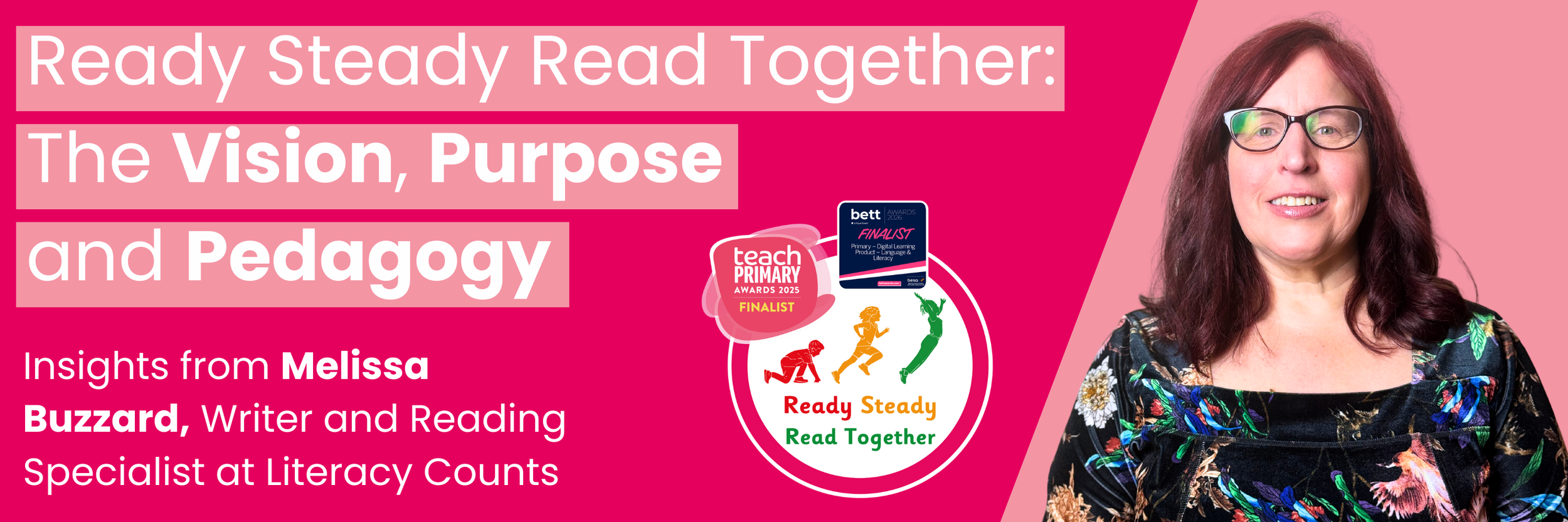
This blog is written by Melissa Buzzard, our Literacy Counts Writer who brings expertise as an experienced practitioner, English Subject Leader and Reading for Pleasure Lead. Melissa played a central role in the creation of Ready Steady Read Together, drawing on her classroom experience and her deep understanding of children’s needs. In this blog, she shares her insights into the vision, principles and pedagogical thinking that shaped the programme.
The Goal of Ready Steady Read Together
The goal of Ready Steady Read Together is to develop lifelong, capable and volitional readers who see the value and purpose in reading for enjoyment, to develop knowledge about their interests and to deepen their understanding of the world around them. We want children to understand that reading opens doors to new discoveries and possibilities. When a child enjoys reading and is successful at it, they will identify as a reader. As a result, they read more frequently which leads to even greater reading success (Matthew effect, Campbell 2023). To achieve this, children must first be able to comprehend the text.
How Ready Steady Read Together Supports Reading Comprehension
Ready Steady Read Together supports children’s learning through carefully structured and scaffolded whole-class reading comprehension lessons. Each lesson includes specific activities to ensure all children can access the lesson.
Activating prior knowledge and questioning the text – Children are presented with multisensory opportunities to make links between their own life experiences to support them in processing the text. Rich class discussion enables children to benefit from the experiences of all pupils.
Explicit instruction on effective reading strategies – Through use of scaffolding, modelling, questioning and metacognition, children develop their understanding of and ability to apply a range of reading strategies such as visualising, summarising, making inferences, etc. to support and monitor their own reading comprehension. At the end of each lesson, teachers are prompted to provide individualised, targeted feedback to highlight excellent use of the taught reading strategies.
Explicit teaching of vocabulary – Challenging vocabulary words, phrases or idioms are pre-taught using dual coding and child-friendly bespoke definitions, supporting all pupils but particularly EAL and SEND children. Children are given an immediate opportunity to interact with vocabulary in different ways throughout the lesson to deepen their understanding. Additional opportunities to utilise the new vocabulary words, both orally (Speaking Spotlight) and in writing (Optional Additional Activity), are included at the end of each unit. Year 2 lessons also include pre-teaching of common exception words which are present in the text extract.
Effective development of fluency – Expertly modelled reading by the teacher enables pupils’ focus to shift from decoding and word recognition to comprehension. The teacher demonstrates expert ability to alter volume, stress or pace and to use phrasing, pausing, tone and expression for effect. Explicit instruction through a combination of modelled, echo and choral reading develops prosody, which enhances text comprehension.
Collaborative learning activities – Children develop their language abilities through articulating their ideas verbally with a peer. Lessons are scaffolded through peer support with carefully chosen partners, which further enables all children, irrespective of their decoding ability, to comprehend the text. These rich discussions develop pupils’ ability to use close reading to identify evidence within a text to support their answer, to interpret the evidence and to extrapolate information from the collection of evidence. For all children, collaborative learning additionally develops social awareness and interpersonal skills.
Low-stakes formative assessment – Each lesson incorporates multiple opportunities for teachers to identify pupils’ strengths and target areas requiring further support. The use of gamification in quiz questions adds fun and heightens engagement in children. In addition, each unit features a written comprehension quiz designed in the style of standardised assessments. This exposes pupils to a wide range of question formats and reading content domains, which builds their confidence and familiarity with the demands of formal testing.
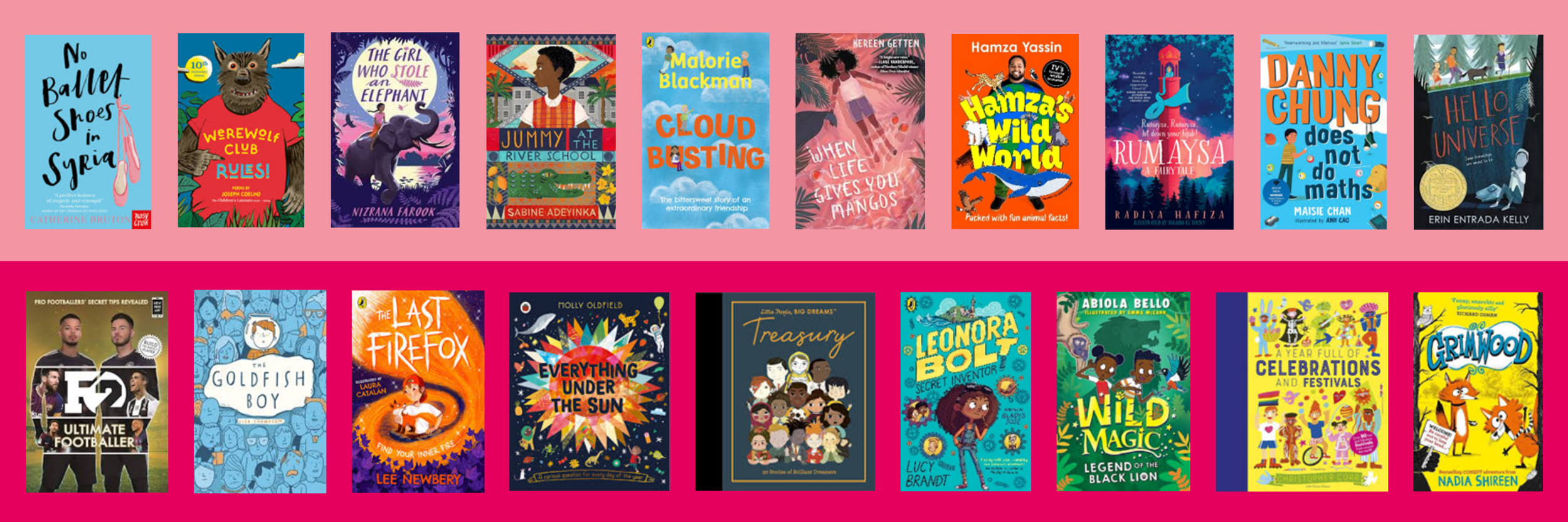
Encouragement of reading for pleasure: Each lesson includes a reading affirmation that promotes positive habits of a reader and helps to nurture a love of reading. The final lesson of each weekly unit also offers carefully selected book recommendations linked to the vehicle text. These may include prequels or sequels, other books by the same author, texts written by other authors with a similar style or a range of genres of books connected to the topic. Recommendations span fiction chapter books, non-fiction texts, picture books, graphic novels, verse novels and poetry, which gives children a rich menu of options to deepen their engagement with reading.
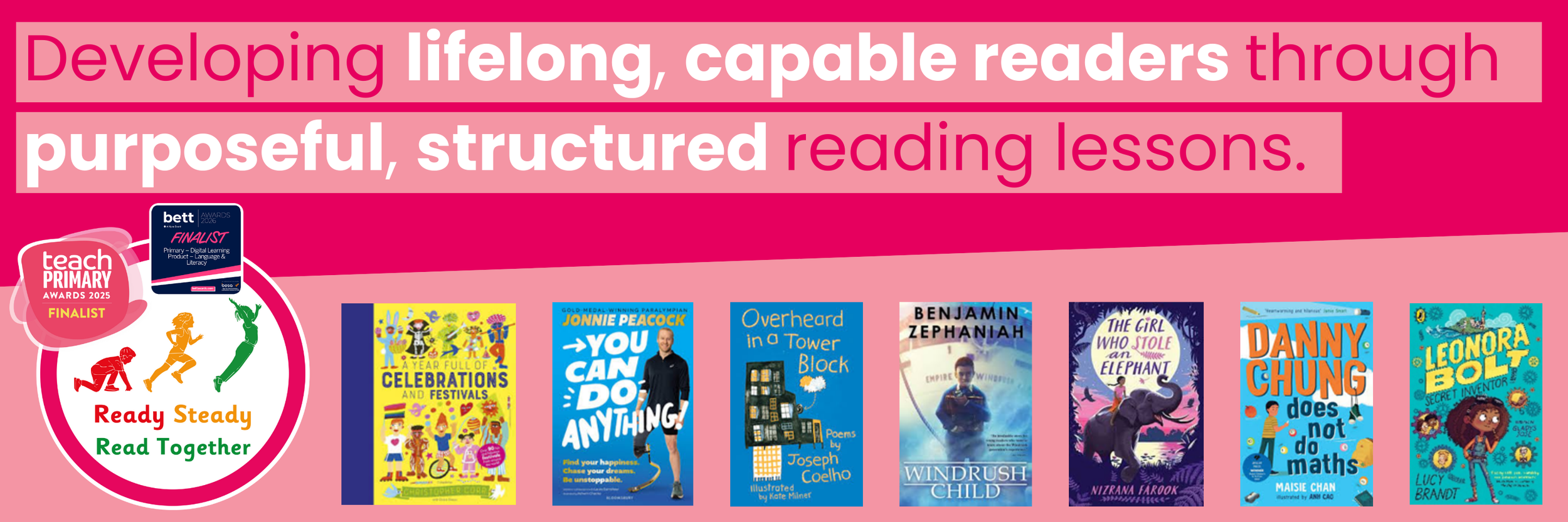
Teachers would teach two fiction, two non-fiction and two poetry units per half term. Several of the books selected have either Ready Steady Write links or curriculum links. The order of units is flexible and can be adapted to align with a school’s long-term plan.
Find Out More
If you are searching for Steps to Read or Ready Steady Comprehension, we invite you to explore the next generation of shared reading:
Book a free discovery call: https://www.literacycounts.co.uk/free-literacy-consultation-primary-schools-mats
Request sample access: https://www.literacycounts.co.uk/contact
Ready Steady Read Together is already helping hundreds of schools raise reading standards and build confident, motivated readers. Discover why so many teachers are choosing it as their shared reading solution today.