
Book FREE Info Webinar -
Book FREE Info Webinar -


A Whole-Class Shared Reading Programme from Year 2 to Year 6
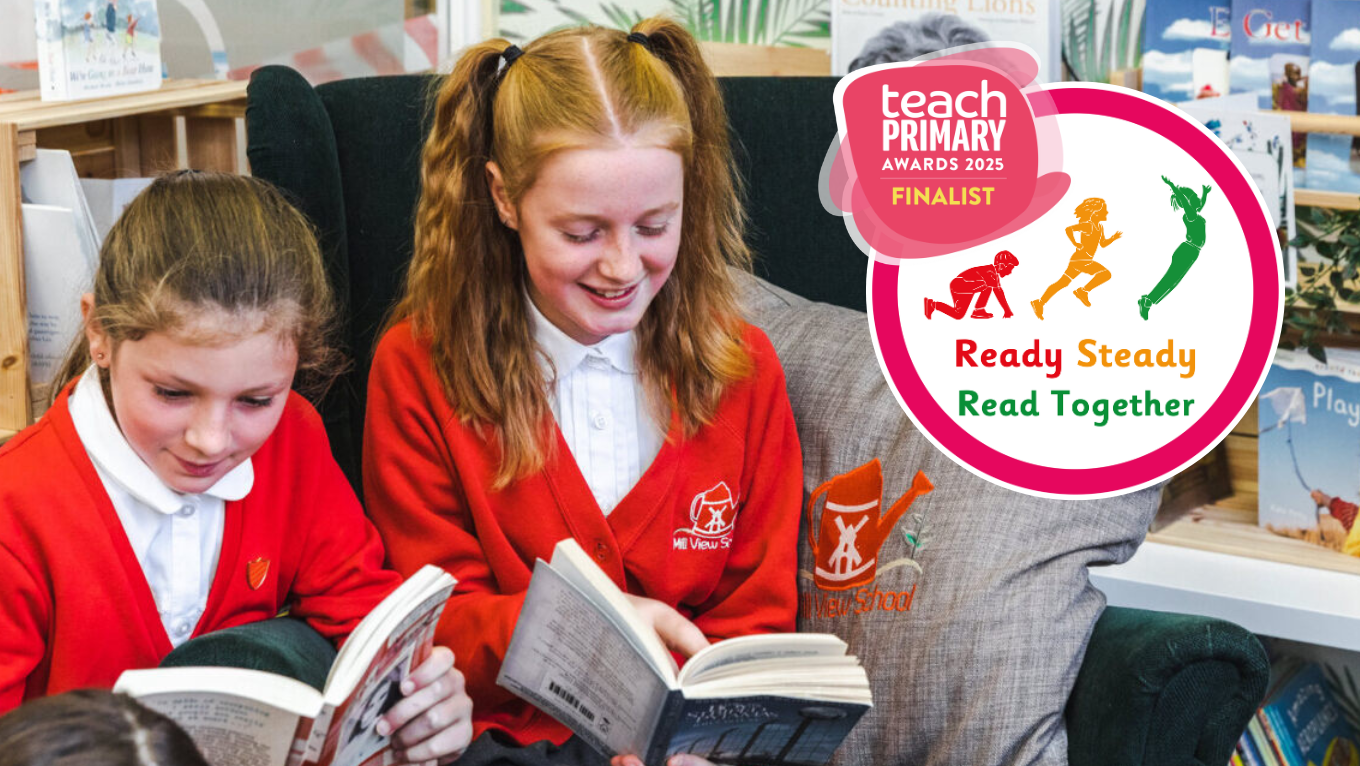
Ready Steady Read Together is a structured, whole-class shared reading programme from Year 2 to Year 6. Designed to develop comprehension skills and support strong reading outcomes, these daily, fully resourced lessons incorporate metacognitive strategies and feature high-quality, diverse texts by exceptional children’s authors. This inclusive reading scheme empowers teachers to deliver effective comprehension teaching across the primary reading curriculum, promoting consistency from year to year.


Award Recognition: Teach Primary Awards Finalist 2025
We are delighted that Ready Steady Read Together has been recognised as a Finalist in the Teach Primary Awards 2025, celebrating it as one of the best reading and comprehension resources to support Key Stage 1 and Key Stage 2 pupils. Run by Teach Primary magazine, these prestigious awards highlight the very best classroom resources. As a new shared reading scheme for primary schools, Ready Steady Read Together is already making a measurable impact in UK and international schools. Teachers and leaders are seeing children’s reading outcomes improve while also benefiting from reduced workload thanks to our structured whole-class shared reading programme.
Why Schools Choose Our Whole-Class Reading Comprehension Programme
Ready Steady Read Together is a carefully structured whole-class shared reading scheme that makes teaching reading comprehension effective and manageable for all teachers. Each unit features high-quality texts and includes sequential, easy-to-deliver slides that explicitly teach reading strategies and comprehension skills. With a fully mapped progression from Year 2 to Year 6, the scheme ensures consistency across year groups and supports teachers of all experience levels in delivering inclusive, impactful reading lessons.
This primary reading scheme is ideal for both individual schools and multi-academy trusts (MATs) seeking a consistent, high-quality approach to comprehension. Whether you are embedding a whole-school reading strategy, developing reading fluency, or aligning curriculum intent across settings, Ready Steady Read Together provides the tools to raise reading outcomes from Year 2 to Year 6. Trusted by UK and international schools, the scheme supports curriculum leaders and teachers with a reading solution that is easy to implement and backed by evidence-informed practice.
Get in touch for sample access, training details & bespoke costings for your school!
Click here to connect with us.
A Structured Reading Scheme for Year 2 to Year 6 Comprehension Success
“The reading units have transformed the way that we teach in our school in a way no other resource has ever managed to do. Seeing the progression mapped out and the quality of the texts and lesson plans, made us certain, as a school, that this resource could not be matched.”
-K. McCormack, Alderman Bolton School


“The training was very engaging and interactive. It felt tailor-made to our school. Thank you Literacy Counts! I am now excited to teach reading.”
“It was great to watch and be part of a model lesson. Thank you Hannah & Literacy Counts - I think we’ve been waiting for this for a long time!”
-The Teaching Team at Middlewich Primary School
"Louise was so knowledgable and provided lots of ideas of how to adapt the scheme for our primary and secondary SEN school. We are really looking forward to implementing this reading scheme!"
"This was great training, delivered with enthusiasm & knowledge. I am looking forward to using Ready Steady Read Together!"
-The Primary & Secondary ESL at The Caldcott SEND School, Kent
Book FREE Webinar ~
Book FREE Webinar ~
Real Feedback from Real Classrooms
Ready Steady Read Together is already proving its impact in classrooms. During Spring Term 2025, we conducted a large-scale trial with schools across the country, and the feedback was overwhelmingly positive. These results demonstrate how a structured, whole-class shared reading scheme can deliver inclusive, manageable and high-impact reading comprehension lessons. From teacher confidence to pupil progress, the feedback highlights how this resource transforms the teaching of reading from Year 2 to Year 6.
Below showcases key findings from our national trial, reinforcing Ready Steady Read Together’s effectiveness as a whole-class reading comprehension scheme for primary schools.



FAQs
-
Ready Steady Read Together improves reading comprehension by explicitly teaching children how skilled readers approach a text. Through the consistent Explore, Teach, Practise & Apply sequence, teachers model key comprehension strategies, explore vocabulary in context and guide children through high-quality discussion before children apply their understanding independently and collaboratively.
Lessons are built around carefully selected extracts from high-quality fiction, non-fiction and poetry texts. Children regularly reread texts, discuss ideas with partners, answer questions using evidence and take part in fluency and spoken language activities. This repeated exposure to vocabulary, discussion and comprehension strategies helps children develop a deeper understanding of what they read over time.
The programme also ensures progression across the primary phase, revisiting and building upon key reading skills across each year group. Because the approach is consistent across the school, teachers are able to develop shared expectations and approaches to comprehension teaching, helping improve confidence, consistency and outcomes for children.
-
A whole-class shared reading approach is effective because it allows all children to access the same high-quality text and take part in meaningful discussion, regardless of their current reading level. In Ready Steady Read Together, teachers guide children through carefully selected extracts using a consistent teaching sequence of Explore, Teach, Practise & Apply, helping children build confidence and familiarity with key reading strategies over time.
Throughout the lessons, teachers explicitly model fluency, vocabulary and comprehension strategies before children apply them through paired discussion, text marking and verbal or written responses. Regular opportunities for rereading, Book Talk and spoken language help children deepen their understanding of the text while developing confidence in explaining their thinking.
Because the whole class shares the same reading experience, teachers can address misconceptions in the moment, expose children to ambitious vocabulary and create meaningful discussions around the text. The structured approach also helps ensure consistency across the school while maintaining high expectations for all learners.
-
Ready Steady Read Together is an inclusive reading scheme that empowers teachers to deliver effective comprehension teaching across the primary reading curriculum, promoting consistency from year to year.
The programme is designed to give teachers the structure, guidance and high-quality resources needed to teach reading with confidence. Each unit includes ready-to-use lesson plans, interactive whiteboard slides and carefully sequenced resources, reducing teacher workload while supporting high-quality teaching.
The clear lesson structure and detailed guidance also make the programme particularly supportive for ECTs and teachers who are new to teaching reading, helping all staff deliver high-quality reading lessons with confidence and consistency across the school.
-
Ready Steady Read Together is carefully aligned to the reading objectives and content domains of the National Curriculum from Year 2 to Year 6. The programme provides progressive coverage of a wide range of high-quality fiction, non-fiction and poetry texts while explicitly teaching the key comprehension skills children are expected to develop throughout primary school, including vocabulary, retrieval, inference, predication, summarising and explanation.
In line with the National Curriculum, Ready Steady Read Together recognises that strong comprehension is built through discussion, vocabulary development and exposure to rich engaging texts. Through carefully structured lessons, teacher modelling and purposeful partner discussion, children are encouraged to deepen their understanding of the world, develop linguistic knowledge and establish a genuine enjoyment of reading.
Ready Steady Read Together also supports the development of reading fluency, spoken language and knowledge across the curriculum, encouraging children to read with increasing accuracy, understanding and confidence while developing imagination and a genuine appreciation of high-quality texts.
-
Ready Steady Read Together supports links to the wider curriculum through a carefully planned range of fiction, non-fiction and poetry texts across each year group. Texts have been chosen to connect naturally to subjects such as history, geography, science, art, DT, PSHE and PE, helping children build background knowledge and subject-specific vocabulary alongside reading comprehension skills.
Across the programme, children encounter texts linked to themes and topics such as space, habitats, Ancient Egypt, healthy eating, migration, world cultures and environmental issues. These links are carefully mapped across the year groups so that children can make meaningful connections between their reading and wider curriculum learning.
-
Ready Steady Read Together places vocabulary at the heart of every shared reading lesson. Children explore carefully selected words and phrases within the context of high-quality texts so that vocabulary development is meaningful and linked closely to comprehension.
Teachers explicitly model how to locate, discuss and understand vocabulary, while children are encouraged to talk about word meanings, reread texts and explain their thinking with partners. Vocabulary is revisited regularly through discussion, fluency activities and comprehension work, giving children repeated opportunities to hear, use and apply new language.
-
Ready Steady Read Together supports teachers in assessing children’ reading comprehension skills through a combination of ongoing formative assessment and termly summative assessment opportunities. Carefully sequenced comprehension questions within each unit allow teachers to monitor pupils’ understanding of vocabulary, retrieval, inference, prediction and explanation skills throughout the reading process.
Approaches such as text marking, highlighting evidence and structured partner work help make children’ thinking visible during lessons. The programme encourages rich discussion, partner talk and oral rehearsal, giving teachers regular opportunities to assess children’ comprehension verbally as well as through written responses. Clear questioning linked to the reading content domains help teachers identify strengths, misconceptions and next steps for individual children and whole classes.
-
Ready Steady Read Together promotes inclusive reading practice by combining explicit teacher modelling, visual scaffolds, collaborative learning and structured discussion to support all learners, particularly children with SEND and EAL. The programme is carefully designed so that children are taught how to understand, interpret and discuss texts through consistent, scaffolded routines.
In lessons, teachers use a range of supportive approaches that reduce cognitive load and help children access increasingly complex texts. Lessons include a visual prompt to activate prior knowledge and encourage discussion linked to the text. Additional images and illustrations are utilised to support children to develop visualisation skills to enhance independent comprehension. Vocabulary is explicitly taught using dual-coding through illustrations combined with definitions in child-friendly language for key words. Taught vocabulary focuses primarily on tier 2 words with some tier 3 words as linked to the unit topic. Children immediately interact with the taught vocabulary using colour-coded text marking, gaining exposure to the key words utilised in a sentence. Low-stakes quiz questions provide further review of taught vocabulary using gamification to assess in a fun, interactive way.
Texts are read aloud to the children by the teacher as the expert reader ensuring that any children’s difficulties with fluency do not impede their comprehension. Teachers explicitly model comprehension strategies and demonstrate how to locate and justify evidence using structured routines and guided text marking. Lessons include opportunities to develop children’s reading fluency through echo and choral reading. Children repeatedly hear texts read aloud, reread extracts through echo and choral reading, and discuss vocabulary and meaning through collaborative learning with partners before responding independently.
Visual strategy prompts using Strategy Stop symbols both on IWB slides and strategy mats develop children’s understanding of a variety of reading strategies. Prompts encourage children to use metacognition to develop and deepen their understanding of reading strategies and when each should be used.
The programme also includes small Focus Groups and additional Ready Steady Read Together: Go sessions for children requiring targeted support, enabling adaptive teaching and early intervention without removing children from the wider reading curriculum.
These approaches help children build confidence, fluency and independence as readers because strategies are taught explicitly and revisited consistently across year groups. For children with SEND and EAL, the combination of oral rehearsal, visual scaffolding, repeated reading and structured partner talk improves comprehension and participation while reducing barriers to learning.
Through the use of teacher as the expert reader, children who may struggle with fluency due to with barriers to reading such as dyslexia, are still able to develop and progress in their comprehension skills. They are able to access age-appropriate texts along with their peers which will increase their confidence in reading.
For schools, this creates a more inclusive and consistent reading culture where high-quality comprehension teaching is accessible to all children, not just confident readers.
-
The aim of Ready Steady Read Together is to develop lifelong, capable and volitional readers who see the value and purpose in reading for enjoyment, to explore personal interests, to build knowledge and to deepen their understanding of the world around them. Ready Steady Read Together promotes reading for pleasure and purpose through a carefully curated collection of high-quality “texts that tempt” (Cremin, 2024) that are designed to engage, inspire and motivate children to read widely and independently.
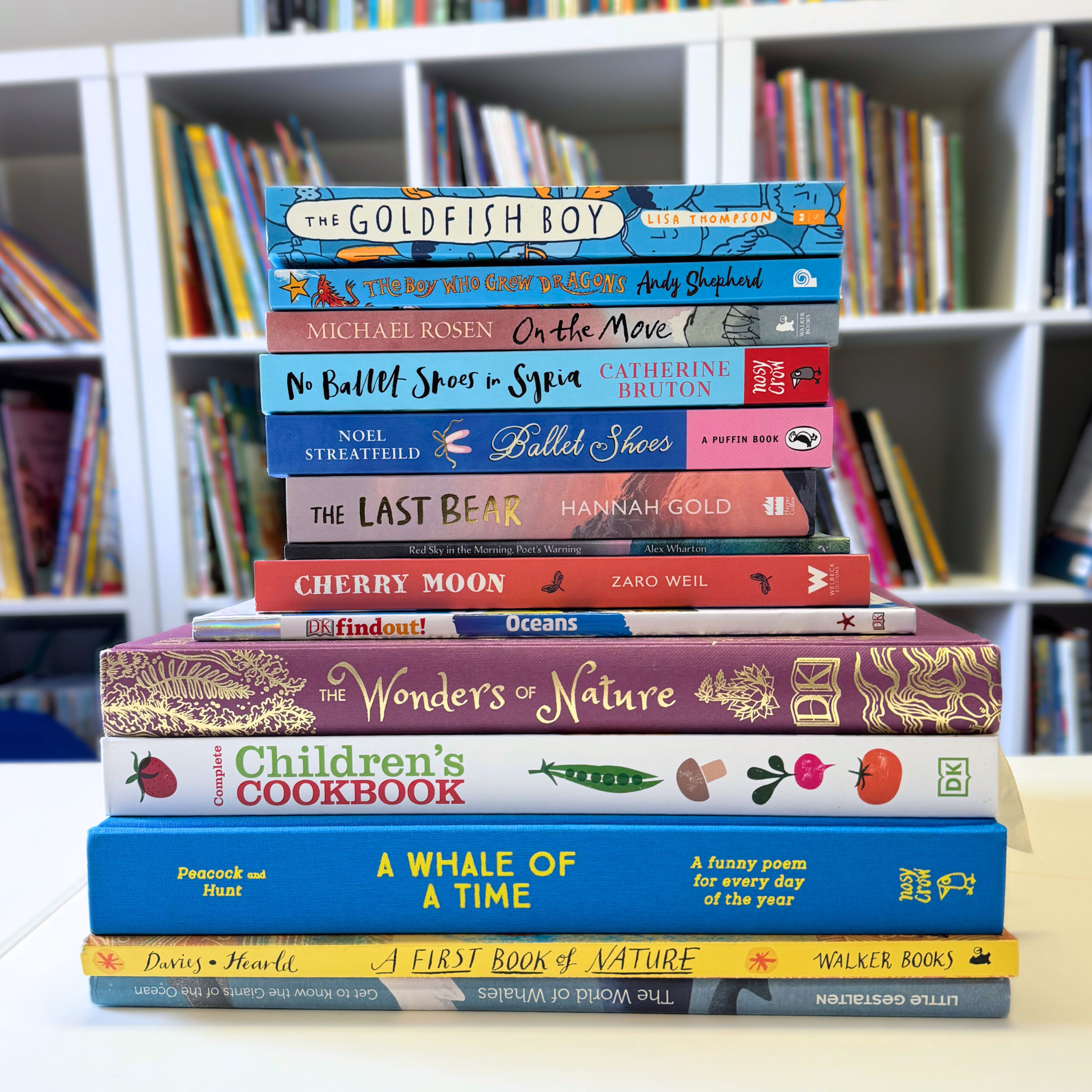
The vehicle texts were intentionally selected to be visually appealing, emotionally engaging and reflective of children’s diverse interests and experiences. Across fiction, non-fiction and poetry, children encounter a broad range of genres, authors and topics, including award-winning fiction, biographies, instructional texts, sport, science, animals, self-help and motivational reading.
Fiction extracts are carefully chosen to create emotional investment, suspense and strong story arcs so that children are motivated to continue reading beyond the lesson. Texts include genres such as fantasy, mystery, historical fiction, comedy and science fiction, helping children discover books and authors they may not otherwise choose or encounter independently.
Non-fiction texts are selected with authentic purpose in mind. Children might read recipes, science experiments, autobiographies, sports texts or instructional guides, helping them understand how reading supports real-life learning, development of interests and attainment of aspirations.
Poetry ranges from classic favourites to contemporary works, many reflecting authentic voices, perspectives and lived experiences. Children encounter a wide variety of poetic forms, including verse novels, which, due to being less dense in text, can help to develop reading confidence. Poetry exposes children to rich and rhythmic language, poetic features and thematic discussion.
Weekly lessons include reading affirmations and curated book recommendations to encourage further independent reading. Printable posters of linked recommended reads are included in the resources to offer a broad spectrum of recommendations. We recognise that children have different reading preferences and needs. Some children might prefer a particular genre or a specific text type, such as non-fiction or poetry. Others may be reluctant readers who are drawn to highly engaging graphic novels. Some children may need dyslexia-friendly ‘easy reader’ texts to support their reading confidence. Our picture book recommendations also provide teachers with ideas for quick end-of-day reads.
Our ‘Reading Counts’ recommended reads posters can be displayed in classrooms and library spaces to encourage rich ‘book banter’ by prompting children to discuss books that interest them and explore new authors, genres and text types. They can be shared within the wider school community, encouraging reading conversations at home. In addition, the posters support teachers in broadening their knowledge of children’s literature to enable them to easily make personal recommendations to their children. Ready Steady Read Together already exposes children to over 180 books from Year 2 – Year 6. Sharing these posters each week further strengthens a reading-for-pleasure culture, as recommended by The Reading Framework, helping children discover new authors, genres and texts and by engaging the wider school community in reading.
Ready Steady Read Together helps children develop positive reading identities and stronger long-term reading habits. When children enjoy reading and experience success with it, they are more likely to identify as readers and choose to read more frequently, which in turn strengthens reading attainment and comprehension over time.
By exposing children to a broad range of engaging and meaningful texts, Ready Steady Read Together helps schools build a genuine culture of reading for pleasure. Schools benefit from a reading curriculum that not only improves reading outcomes, but also nurtures curiosity, aspiration and lifelong engagement with books.
-
Ready Steady Read Together promotes diversity and representation through a carefully curated collection of high-quality vehicle texts that reflect a wide range of cultures, communities, identities, family structures and life experiences. Over 50% of the Ready Steady Read Together vehicle texts include diverse representation in at least one form, including diverse authors and illustrators, authentic poetic voices, real-life figures from different countries and backgrounds, diverse characters and families, and a broad range of themes and experiences.
Diversity is not treated as a standalone topic or tokenistic addition. Instead, it is embedded purposefully throughout the programme so that every child can both see themselves reflected in literature and develop understanding of the wider world. In selecting texts, the aim was simple but important: for every child to feel represented, valued and inspired, while ensuring all texts remain rich, ambitious and capable of driving strong reading outcomes.
In classrooms, children encounter fiction, non-fiction and poetry from a broad range of authors, perspectives and lived experiences. Children might study biographies of influential scientists, artists, musicians, athletes or historical figures from diverse backgrounds, explore stories featuring different family structures and communities, or engage with poetry that reflects authentic cultural voices and experiences.
Importantly, these texts are chosen not simply because they are diverse. The chose n texts are examples of high quality literature that naturally open discussion around identity, belonging and different perspectives. They naturally encourage empathy, broaden the understanding of others and contribute to a deeper understanding of the world.
This approach has a significant impact on both child engagement and school culture. Today’s classrooms are multicultural, and children’s experiences vary widely. Children are more likely to engage with reading when texts reflect relatable experiences. Diverse representation cultivates a sense of belonging: when children feel accepted and their stories and backgrounds are valued, confidence and engagement increase. When children feel accepted and see their stories, backgrounds and identities valued within the curriculum, confidence, motivation and participation increase, often leading to stronger reading outcomes and higher achievement.
Encountering diverse examples of success, whether through books by authors from different backgrounds or biographies of diverse scientists, artists, musicians, athletes or historical figures, children’s aspirations broaden and elevate. In choosing vehicle texts for Ready Steady Read Together, we wanted every child to feel represented. We wanted all children to feel that voices and stories like theirs are important and valued.
-
Ready Steady Read Together does not provide separate mixed-age planning, but the programme is flexible enough to work well in mixed-age classes. Because the National Curriculum reading objectives are organised by phase rather than individual year groups, schools can create their own progression based on the needs of their children.
This means schools can draw from units across different year groups where appropriate. For example, a mixed Year 3/4 class might use a combination of both Year 3 and Year 4 units across the year. There is no fixed order to the units within Ready Steady Read Together, giving schools the flexibility to choose and sequence texts in a way that best suits their curriculum, class structure and long-term plans.
-
Ready Steady Read Together develops oracy through regular opportunities for children to talk, discuss and explain their thinking during shared reading lessons. Children work with partners, respond to questions verbally, justify their ideas using evidence from the text and take part in whole-class discussion throughout the teaching sequence.
The programme also includes a dedicated spoken language focus within Lesson 5 through “Speaking Spotlight” activities. These include approaches such as debates, hot seating, TV Journalist, role play and performance activities, helping children to develop confidence as speakers and listeners in a meaningful context linked to the text being studied.
Fluency work, re-reading and oral rehearsal are embedded throughout the programme, supporting children to articulate ideas clearly while deepening their understanding of what they read.
-
Ready Steady Read Together helps children develop the fluency, vocabulary and comprehension skills needed for success in both KS1 and KS2 SATs. Through carefully structured units based on high-quality texts, children are taught to retrieve information, explain vocabulary, make inferences, summarise ideas and justify answers using evidence from the text.
Children are exposed to a wide range of fiction, non-fiction and poetry texts, helping them become confident readers across different genres and question types. The programme develops reading stamina and confidence through repeated reading, modelled fluency and purposeful partner talk.
To support assessment readiness, Ready Steady Read Together includes termly SATs-style assessment papers from Year 2 to Year 6. These assessments help teachers track progress across the reading content domains while familiarising pupils with the structure and language of national test questions.
-
Yes. While Ready Steady Read Together is primarily a shared reading programme, children are regularly given opportunities to record written responses as part of the lesson sequence.
Across the week, children answer comprehension questions, annotate texts, record evidence and write responses linked to their reading. Teachers model how to use evidence from the text effectively and support children in turning discussion into clear written answers. Lesson 5 also includes assessment-style comprehension questions in the workbook, alongside an optional writing activity which can also be used as a homework task.
Because children are exposed to a wide range of high-quality texts, vocabulary and text types, the programme also helps support wider writing development across the curriculum.
-
Ready Steady Read Together helps develop staff confidence and understanding of reading teaching through a clear and consistent whole-school approach to shared reading. The structured lesson sequence and detailed planning support teachers in modelling fluency, teaching vocabulary, guiding discussion and developing comprehension in a consistent way across the school.
The programme also helps broaden teachers’ knowledge of children’s literature. Across the year groups, staff are introduced to a wide range of authors, genres, text types and literary traditions, helping them become more familiar with high-quality texts and how these can be used to support reading for pleasure, curriculum links and progression in reading.
Because the approach is used consistently across the school, it also helps create shared expectations and a common language around the teaching of reading, supporting both experienced teachers and staff who are newer to teaching shared reading.
-
We strongly encourage schools to have the Ready Steady Read Together vehicle texts available to maximise reading for pleasure and independent access. Our partners, Peters, offer a 20% discount on Ready Steady Read Together book packs to make this an affordable option for school budgets.
When selecting extracts for each fiction unit, our aim is to captivate the reader. Fiction extracts are chosen to create a sense of story arc, often featuring compelling scenes, emotional challenges or cliffhangers. Our goal is for children to identify with characters and become so emotionally invested that, at the end of the unit, they are inspired to read the book in its entirety. Whilst many might visit their local library or bookshop to discover what happens next, for some this might not be an option. Having the vehicle texts in the classroom or school library makes reading for pleasure available to all children.
Whilst we understand that school budgets are tightly stretched, many of our classics or modern award-winning vehicle texts are likely to already be owned by schools. Others might be sourced through local library services, book swaps, PTA fundraising or phased purchasing over time. Schools might prioritise purchasing the high-interest fiction books first and build collections gradually. Several charitable organisations offer grant funding to schools for the purchase of books.
Text extracts are included in the lesson resources. However, having the physical texts available does strengthen the wider impact of the programme. When children can revisit books independently, continue reading beyond extracts and access texts during reading for pleasure time, engagement and reading stamina often increase. This is particularly valuable for developing a strong whole-school reading culture and supporting children who may not otherwise have regular access to high-quality literature at home.
-
The vehicle texts within Ready Steady Read Together have been carefully chosen to provide children with a rich and varied reading experience across the primary phase. The programme includes a balance of fiction, non-fiction and poetry, exposing children to a wide range of authors, themes, genres, text types and literary traditions.
Across the year groups, children encounter contemporary and classic texts, stories from different cultures and traditions, poetry collections, myths and legends, biographies, instructional texts, encyclopaedias and discussion texts. The text selection has also been designed to reflect a broad range of voices, experiences and perspectives, helping children develop both reading comprehension and wider knowledge of the world around them.
By revisiting different genres, themes and text conventions over time, children build confidence as readers while developing fluency, vocabulary and deeper understanding through high-quality shared reading experiences.
-
Ready Steady Read Together is organised into weekly shared reading units built around high-quality fiction, non-fiction and poetry texts. Each week includes five shared reading lessons, all based on carefully selected extracts from the focus text. Lessons 1 to 4 explicitly teach comprehension strategies through discussion, vocabulary exploration, fluency and text-marking activities. In Lesson 5, children continue working with extracts from the text and answer assessment-style comprehension questions in their booklet, alongside opportunities for spoken language and discussion.
Every lesson follows the same clear teaching sequence: Explore, Teach, Practise & Apply. This consistent structure helps children build confidence and allows teachers to model reading strategies explicitly before children apply them independently and collaboratively.
To support delivery, the programme includes detailed lesson plans, interactive whiteboard slides, Practise & Apply child booklets, strategy resources, assessment materials and guidance for adaptive teaching and intervention. Schools also receive Ready Steady Read Together: Go materials to provide additional support where needed.
-
Yes. Ready Steady Read Together offers excellent value for money because it provides schools with a complete shared reading curriculum, high-quality teaching resources and ongoing professional development support within one package.
For a one-form entry primary school of approximately 210 children, the annual membership cost of £595 works out at around 1.5p per child, per school day across the academic year. For that cost, schools receive fully planned shared reading units, carefully selected high-quality texts, interactive teaching slides, pupil booklets, assessment materials, strategy resources and adaptive teaching guidance. The programme also reduces teacher workload significantly by providing ready-to-use, carefully sequenced lessons that support consistency across the school.
The Essential Training Package, priced at £1325, also represents strong long-term value because it is designed to support sustainable whole-school improvement rather than one-off training. The package includes whole-school professional development, leadership consultancy and adaptive teaching training to ensure the programme is implemented successfully across all year groups. Staff can revisit training materials over time, making the support particularly valuable for onboarding new staff, strengthening subject knowledge and maintaining consistency year after year.
Importantly, the value extends beyond the resources themselves. Schools benefit from improved reading comprehension outcomes, stronger teacher confidence, increased consistency in teaching practice and a richer whole-school reading culture. When combined with reduced planning workload, ongoing CPD and sustainable implementation support, Ready Steady Read Together provides a highly cost-effective investment in reading provision.
Our School Improvement Reading Project

Improve Reading Outcomes with the Everybody Read: 2 Year Project
Everybody Read is our structured two-year reading improvement project, designed to embed high-quality reading practice across whole schools and MATs. Grounded in the research-informed and impact-proven Ready Steady Read Together scheme, the project equips leaders, teachers and support staff with the strategies and tools they need to raise reading outcomes from EYFS to KS3.
Whether your goal is to develop fluency, close attainment gaps or build consistency in the teaching of reading, Everybody Read offers comprehensive support across two academic years — including leadership development, whole-school CPD, progress tracking, reading comprehension strategies, and transition support between key stages.
This school improvement project will transform reading provision with a sustainable, inclusive and evidence-based approach.

Want to explore a reading improvement project for your school or trust? Book a FREE 1:1 meeting with an expert consultant.
Big things are coming. Are you ready?
Big things are coming. Are you ready?
Used by schools in the UK and internationally
Join our mailing list!
Join our mailing list to keep up to date with news and upcoming courses!